 Skip to content
The Real Reason Your Garden Floods Every December (And How to Fix It)
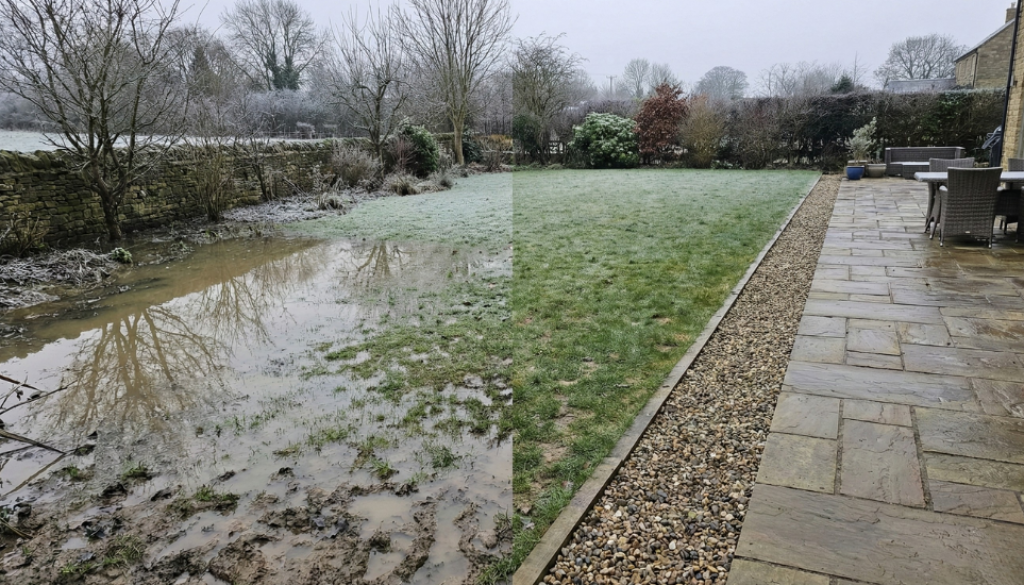
Many homeowners accept winter garden flooding as unavoidable. Every December, lawns turn spongy, borders collapse into mud, and patios become surrounded by standing water. While heavy rainfall plays a role, the real cause of repeated flooding is rarely the weather alone. In most cases, the issue lies beneath the surface.
Poor drainage design, compacted soil, and incorrect landscaping choices trap water instead of allowing it to flow away naturally. Understanding why your garden floods each winter is the first step toward fixing the problem permanently, rather than managing the symptoms year after year.
Rainfall Reveals Drainage Weaknesses
December rainfall is persistent rather than extreme. This steady saturation exposes weaknesses in soil structure and drainage systems that may go unnoticed during drier months. When water has nowhere to go, it accumulates at the surface, flooding lawns and garden beds.
Gardens built without proper drainage planning struggle to cope with prolonged wet conditions. Soil becomes compacted, oxygen levels drop, and water movement slows dramatically. Over time, repeated saturation damages both soft and hard landscaping.
Compacted Soil Stops Water from Draining
One of the most common causes of winter flooding is soil compaction. Heavy foot traffic, construction work, and poor groundwork compress soil particles together, leaving little space for water to drain. Clay-heavy soils are particularly prone to this issue.
When soil is compacted, water remains trapped near the surface. Lawns become waterlogged, roots suffocate, and grass coverage thins. Without intervention, compacted soil continues to worsen each winter, increasing flooding and surface instability.
Incorrect Garden Levels Push Water the Wrong Way
Garden levels determine how water moves across the space. If patios, paths, or lawns are laid without correct falls, water naturally flows toward low points—often directly into the garden instead of away from it.
Even small level errors can have major consequences during winter. Water pooling at the base of patios, along fence lines, or near the house indicates that surface gradients are working against drainage. Correcting levels is often essential to solving flooding issues permanently.
Patios and Paths Can Block Natural Water Flow
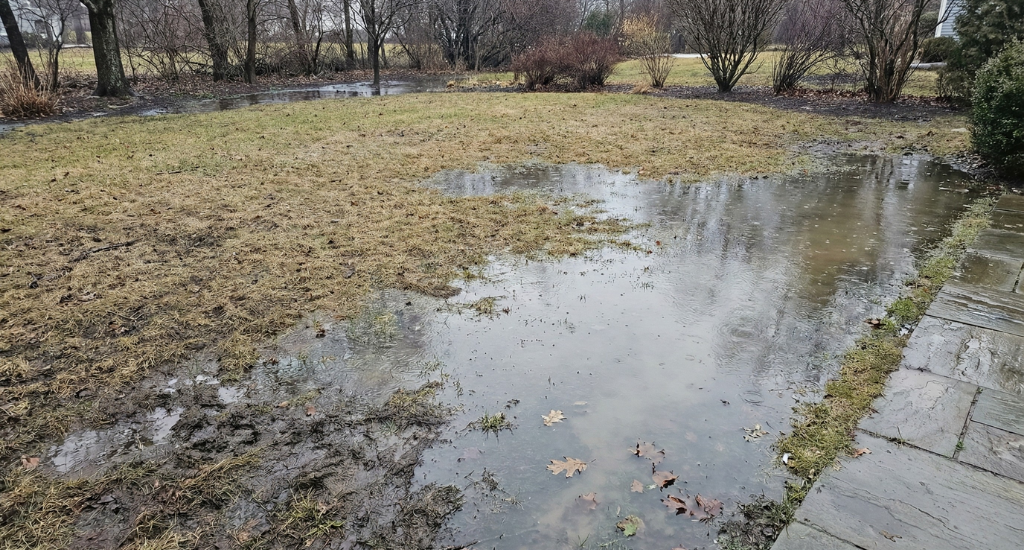
Hard landscaping alters how water moves through a garden. When patios or pathways are installed without proper drainage consideration, they can act as barriers that block water’s natural route into the ground.
Water then collects along edges, seeps beneath paving, or floods adjacent lawns. Over time, this causes soil erosion, patio movement, and deterioration of foundations. Integrating drainage solutions during installation prevents these problems from developing.
Missing or Inadequate Drainage Systems
Many gardens lack dedicated drainage systems entirely. Without channels, soakaways, or French drains, water has no controlled path to follow during prolonged rainfall. Instead, it spreads unpredictably across the garden.
Inadequate drainage systems can also fail when they are undersized or incorrectly installed. Blocked pipes, shallow trenches, or poor gradients reduce effectiveness, making flooding inevitable during winter months.
Why Flooding Gets Worse Each Year
Once flooding begins, it often worsens annually. Saturated soil becomes more compacted, reducing drainage capacity further. Plant roots weaken, organic matter breaks down, and surface levels shift slightly with each season.
Hard landscaping installed over unstable ground may begin to sink or crack, creating additional low points where water gathers. Without intervention, what starts as minor waterlogging can develop into widespread garden damage.
How Proper Drainage Fixes Winter Flooding
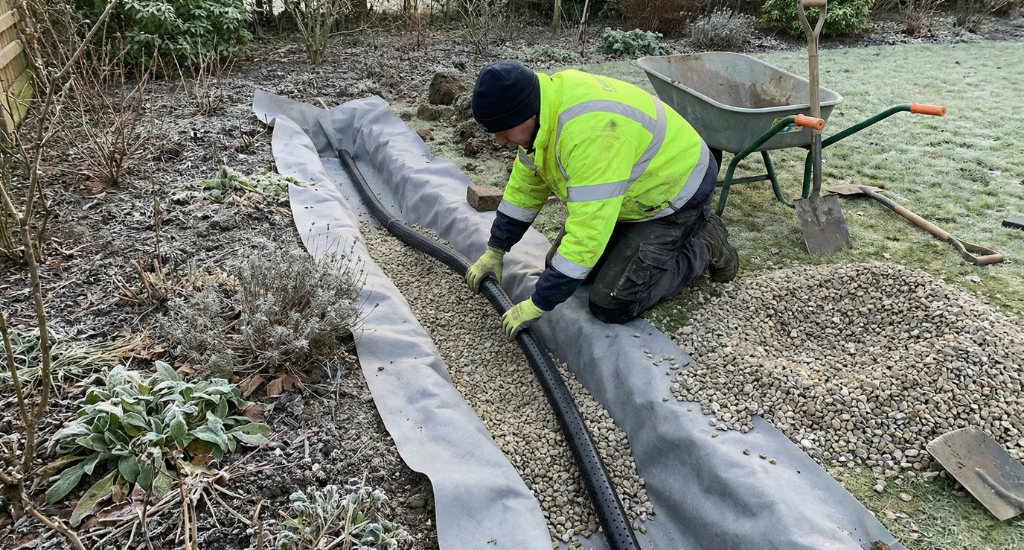
Effective drainage works by controlling where water goes rather than allowing it to spread. French drains collect excess water below the surface and channel it away from vulnerable areas. Soakaways disperse water slowly into the ground, preventing saturation.
Surface drains and channels protect patios and pathways by intercepting runoff before it reaches garden beds. When combined with correct levels and permeable materials, these systems restore balance to the garden’s natural water flow.
Improving Soil Structure for Better Absorption
Drainage solutions work best when soil structure is improved alongside them. Aeration, organic matter incorporation, and soil replacement increase permeability and reduce compaction.
In clay-heavy gardens, introducing drainage layers beneath lawns or planting areas improves long-term absorption. Healthy soil allows water to drain steadily instead of pooling at the surface during winter.
Choosing Permeable Landscaping Materials
Permeable paving and gravel surfaces allow water to pass through rather than run off. These materials reduce pressure on drainage systems and help manage heavy rainfall naturally.
Replacing impermeable surfaces with permeable alternatives can significantly reduce winter flooding, particularly in high-risk areas where water consistently collects.
Why DIY Fixes Rarely Solve the Problem
Temporary solutions such as digging shallow trenches or adding topsoil often worsen flooding. Without proper depth, gradient, and filtration, water simply relocates to another area of the garden.
Professional drainage design considers the entire space—soil type, water movement, levels, and load-bearing requirements. This ensures the solution addresses the root cause, not just the visible symptoms.
Fix Winter Flooding Properly with Ominiworks
Recurring December flooding is not inevitable. With correct drainage design, soil improvement, and professional installation, gardens can remain usable and stable even during prolonged winter rain.
Ominiworks specialises in diagnosing and resolving garden drainage problems. Our team designs tailored solutions that manage water effectively, protect hard landscaping, and restore healthy soil conditions.
Stop winter flooding at the source—contact Ominiworks today for professional drainage assessment and long-term solutions.


