Drainage Mistakes That Destroy Gardens—and How We Prevent Them
Garden drainage is one of the most overlooked aspects of outdoor design, yet it directly affects plant health, soil structure, hard landscaping, and the long-term stability of patios and driveways. When drainage is poorly planned or incorrectly installed, the damage becomes noticeable quickly—waterlogged lawns, shifting paving, dying plants, and muddy, unusable spaces.
Many homeowners assume these problems come from rain alone, but the real culprit is almost always hidden below the surface. Understanding the most common drainage mistakes is the first step toward preventing long-term structural and aesthetic damage in your garden.
Poor Soil Assessment Leads to Persistent Waterlogging
Before any garden project begins, the soil must be assessed properly. Heavy clay, compacted soil, or shallow topsoil can stop water from draining away, creating stagnant puddles that suffocate plants and promote root rot.
When soil conditions are ignored, even the most beautifully landscaped garden will struggle. Water remains trapped, lawns become spongy and uneven, and plant beds start to fail. Proper assessment allows the drainage system to be designed specifically for the property’s soil profile, preventing long-term issues.
Incorrect Patio Levels Cause Water to Flow in the Wrong Direction
A common drainage error occurs when patios or pathways are laid without the correct fall. Surfaces require a slight gradient so water naturally flows away from the home and into designated drainage areas.
When this slope is miscalculated—or ignored entirely—water pools against the house, seeps into mortar joints, or floods adjoining garden areas. Over time, this causes structural damage, joint erosion, rising damp, and premature deterioration of the paving itself. The cost of correcting these mistakes later far exceeds the cost of getting gradients right from the start.

Using the Wrong Sub-Base Under Patios and Paths
The sub-base is the foundation of every hard-landscaped area. When too thin, poorly compacted, or made with low-grade aggregates, it fails to support the surface during wet weather. Water infiltrates, softens the base, and causes movement.
This results in sinking slabs, shifting blocks, trip hazards, and widening joints. A proper sub-base uses MOT Type 1 or a permeable foundation (depending on design), compacted in layers to create a stable, water-resistant platform. Without this, even a newly installed patio can fail within months.
Ignoring Surface Water Runoff Patterns
Rain rarely falls evenly across a garden. Roofs, driveways, and slopes concentrate water into specific areas, and without proper planning, these become choke points. When runoff is ignored, water overwhelms the soil, erodes pathways, and floods lawns.
Professional landscapers map how water behaves across the whole plot—not just one section—to ensure the drainage design accounts for natural movement. Solutions may include channels, swales, soakaways, or redirecting water into planting areas that can handle higher moisture levels.
Incorrect or Missing Drainage Channels
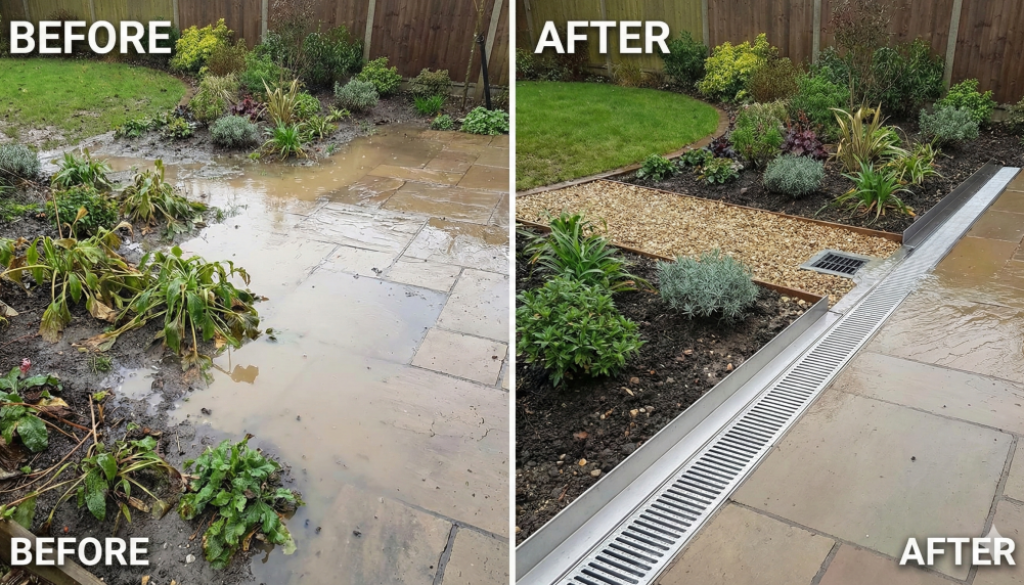
Driveways and patios often need dedicated drainage channels, especially when positioned near buildings or built on sloped gardens. When channels are missing or incorrectly installed, water collects in the wrong place, saturating the ground or pushing against foundations.
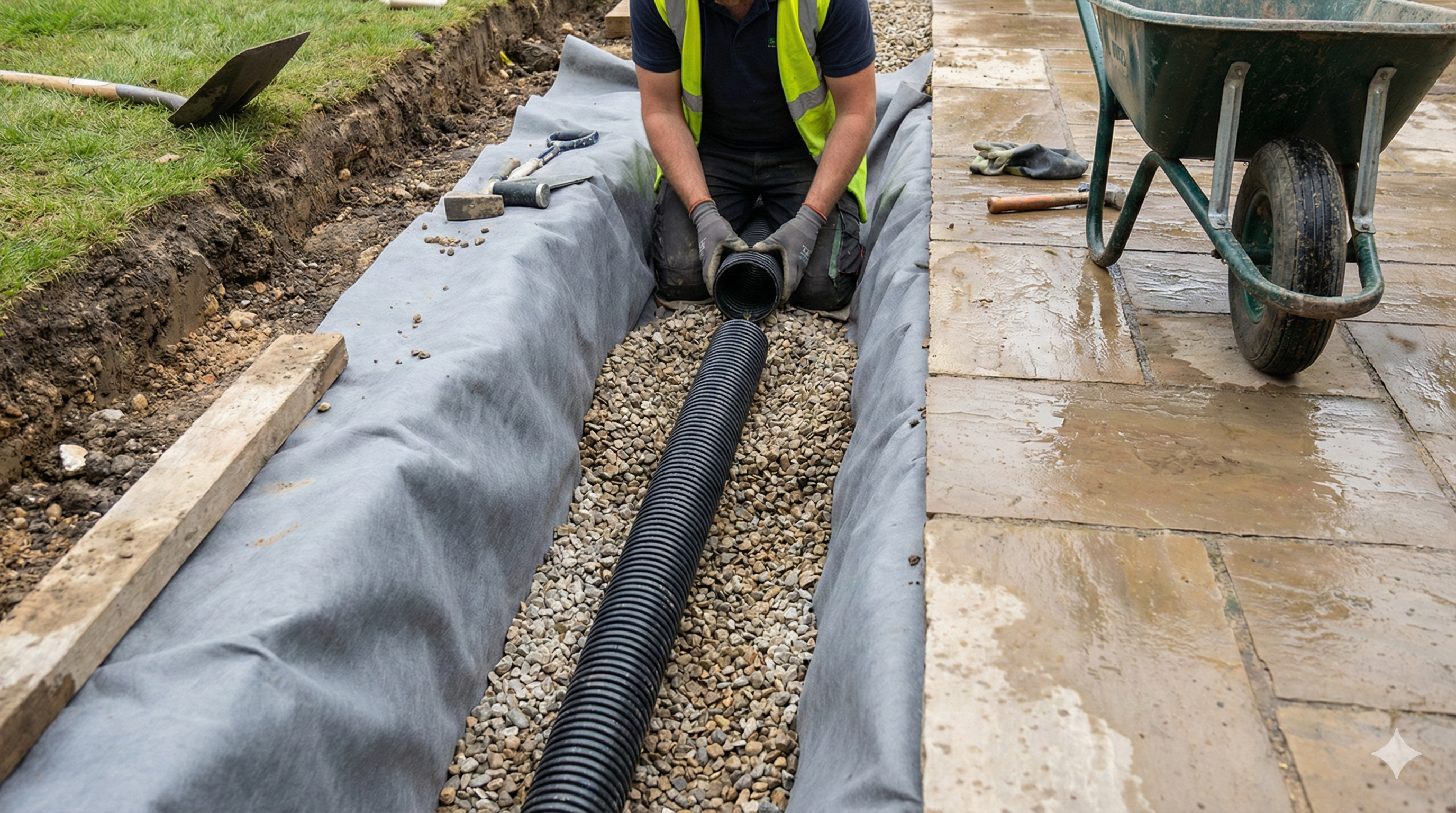
High-quality linear drains or French drains can redirect large volumes of water efficiently. When installed correctly, they protect hard surfaces, prevent erosion, and keep surrounding garden elements stable through heavy rainfall.
Failure to Separate Lawn and Hard Landscaping Drainage
Lawns and paved areas drain differently. When both are connected without planning, water travels unpredictably—flooding grass areas or washing soil across patios. Each section of the garden requires independent pathways for water to flow safely.
Proper separation avoids muddy lawns, reduces maintenance, and prevents constant wash-back of soil and debris onto patios, driveways, or paving borders.
Planting Without Considering Water Needs
Certain plants thrive in well-drained soil; others require moisture-retentive environments. Planting without matching the right species to the right conditions results in stressed, dying, or diseased shrubs.
Strategic planting not only improves visual appeal but also supports the garden’s drainage performance. Deep-rooted species can help stabilise wet areas, while moisture-loving plants thrive near drainage routes. The wrong placement, however, amplifies drainage issues instead of reducing them.
Using Impermeable Materials Where Permeable Options Are Needed
Many modern landscaping materials are permeable and can help manage drainage naturally. Choosing non-permeable materials in the wrong setting increases runoff, overwhelms drains, and creates waterlogged patches.
Permeable paving, gravel beds, and resin-bound surfaces help alleviate water pressure in high-rainfall areas. Using them strategically reduces the risk of flooding and minimises strain on underground drainage systems.
How We Prevent These Problems at Ominiworks
Preventing drainage issues begins long before installation. Our team carries out detailed assessments of soil type, levels, water movement, and load-bearing requirements. Every project is designed with both aesthetics and long-term performance in mind.
We ensure correct excavation depth, proper fall alignment, and appropriate foundation layers. Where needed, we integrate channel drains, French drains, soakaways, or permeable surfaces to keep water flowing exactly where it should. This prevents waterlogging, soil erosion, and structural movement—ensuring your garden and hard landscaping remain strong and visually appealing all year.
Protect Your Garden with Ominiworks
Poor drainage can ruin even the most carefully designed garden. By avoiding the common mistakes homeowners and inexperienced contractors make, your outdoor space stays healthier, safer, and more durable.
Ominiworks provides expert landscaping, patio construction, and drainage solutions built for long-term performance. From correcting existing issues to designing new outdoor spaces with proper water management, our team ensures every element works together exactly as it should.
Safeguard your garden from avoidable damage—contact Ominiworks today for professional drainage planning and installation.