
PATIOS & PAVING
The Real Cost of Fixing a Botched Patio Installation
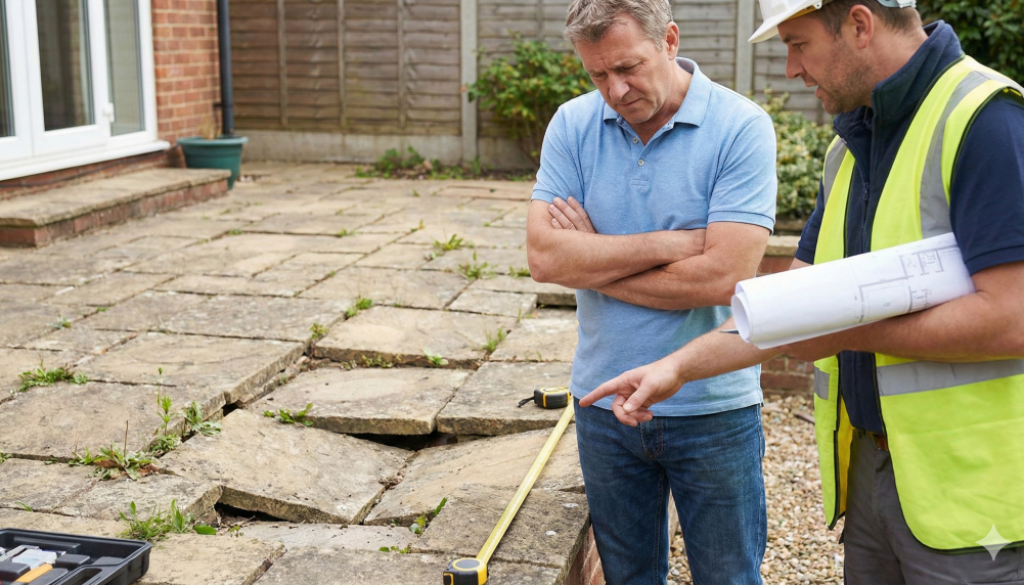
A patio should be a durable, attractive feature that adds value and usability to your garden. Unfortunately, many homeowners discover too late that their patio has been installed poorly. Uneven slabs, drainage problems, loose joints, and surface sinking are all common symptoms of a botched installation. These issues not only ruin the appearance of the space but also create safety hazards and expensive repair work.
Fixing a poorly built patio is almost always more costly than installing it correctly the first time. Understanding where things go wrong—and why repairs become so expensive—helps homeowners avoid the stress, disruption, and financial burden of correcting someone else’s mistakes.
Why Poor Installation Leads to High Repair Costs
Most patio failures begin below the surface. When contractors cut corners on groundwork, compaction, or drainage, the patio may look fine initially but starts to fail months later. Once the structure begins shifting or sinking, repairs often require removing large sections of paving and rebuilding the base entirely.
Homeowners face increased repair costs because the original problems are usually hidden. What seems like a minor dip or loose joint can indicate deeper issues with the sub-base. Rebuilding from the ground up takes more time, materials, and labour than a properly planned installation.
The True Cost of Improper Groundwork
The groundwork phase is where cowboy contractors most often cut corners. They skip excavation depth, use low-grade sub-base materials, or fail to compact each layer properly. This creates an unstable foundation that eventually collapses under weight or rain.
Fixing this requires more than patchwork: damaged areas must be lifted, spoil removed, new sub-base laid, and the surface reinstated. In severe cases—particularly with large patios—full reconstruction is the only long-term solution. This process can cost two to three times more than a correct installation.
Drainage Errors That Lead to Structural Damage
Patios require proper falls to move water away from the surface. Wrong gradients, blocked channels, or lack of drainage planning causes water to pool. Over time, this water penetrates joints, weakens the base, and encourages frost damage.
Drainage repairs can involve installing new channels, altering levels, or rebuilding areas where water has eroded the foundation. These fixes take time and must be integrated into the patio’s existing design, further adding to labour time and cost.

Why “Cheap Quotes” Become Expensive Mistakes
Low-cost installations often come with hidden compromises. Contractors promising unusually low prices typically reduce excavation depth, use cheaper materials, or rush the installation. These shortcuts might not be visible on day one, but they become painfully clear within the first year.
Once a patio begins to fail, homeowners discover that repair work is far more complex than the original installation. Poor groundwork cannot simply be “patched”—it must be replaced properly. Cheap quotes frequently end up costing more in the long run than choosing a reputable installer from the beginning.
Hidden Structural Issues That Raise Repair Costs
Botched patios often hide issues that are only uncovered once slabs are lifted. These can include:
- Insufficient sub-base depth
- No membrane installed
- Incorrect type of aggregate
- Blocked or missing drainage channels
- Poorly compacted layers
- Misaligned edges and shifting borders
Repair teams must correct these issues before reinstating the patio, otherwise the same problems reoccur. Correcting multiple hidden errors significantly increases the cost, because each layer has to be rebuilt properly.
Safety Concerns and Liability Risks
A failing patio can be dangerous. Loose slabs create trip hazards, sunken sections hold water, and unstable edges may collapse under foot traffic. In outdoor areas used by children, elderly family members, or guests, these hazards become serious safety concerns.
Repairing structural hazards requires careful removal and reconstruction to ensure long-term stability. Safety-driven repairs often involve reinforcing edges, adding haunching, and implementing drainage improvements—all of which increase labour time and material requirements.
Lifting and Relaying Costs Add Up Quickly
Even lifting and relaying a small patio requires meticulous work. Each slab must be removed carefully, the sub-base rebuilt, and the slabs relaid with precise joint spacing and correct falls. Poorly installed mortar or jointing compound must also be removed and replaced.
What many homeowners don’t realise is that relaying old slabs isn’t always possible. Some pavers crack during removal or arrive damaged from the original poor installation. Replacing sections with new slabs often forces a full redesign to maintain a consistent appearance.
When Full Rebuilds Become Necessary
When failure affects the entire patio, a complete rebuild is often the only practical solution. This usually happens when:
- The sub-base is too shallow
- Incorrect materials were used
- The entire surface is uneven
- Drainage was never considered
- Borders and edges are failing
Full rebuilds cost more simply because it’s double the work: the defective patio must be dismantled and removed before a new one can be built. Homeowners who thought they were getting a “bargain” quickly realise how much these shortcuts really cost.
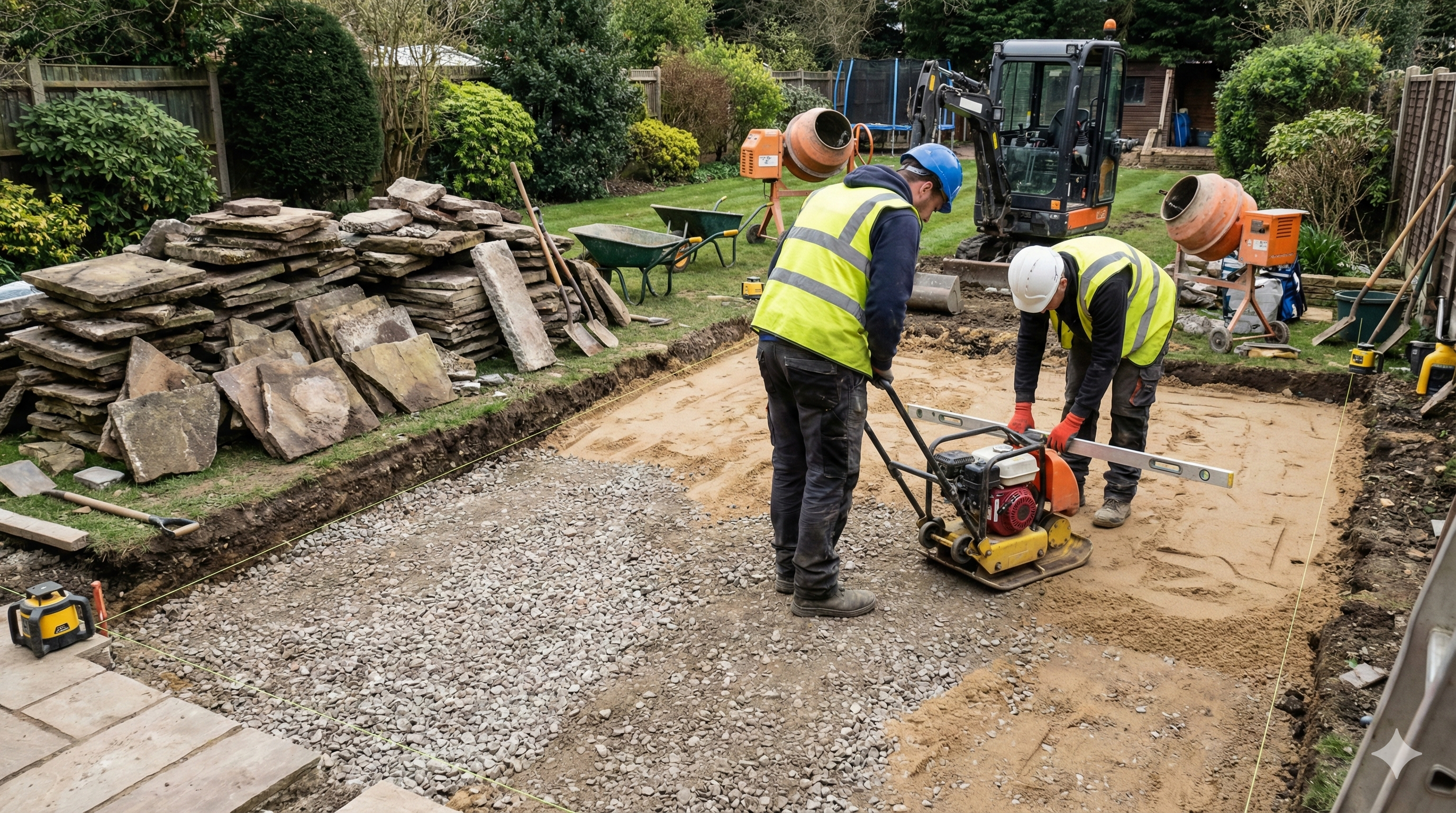
The Value of Professional Installation From the Start
Professional patio installation prevents these costly repairs entirely. Reputable contractors follow proper groundwork depths, use the right aggregates, establish correct drainage falls, and ensure slabs are laid evenly with durable jointing materials.
A patio built correctly the first time lasts decades with minimal maintenance. It stays level, drains properly, and enhances your garden’s design. Choosing professionals protects your investment and avoids the stress of rebuilding a failed installation.
Restore Your Patio with Ominiworks
Fixing a botched patio installation is often more expensive than starting from scratch, especially when deep structural issues are involved. The best way to avoid these costs is by choosing a professional team that prioritises groundwork, drainage, and long-term durability.
Ominiworks specialises in patio construction and corrective work. We rebuild failed installations properly, using durable materials and correct installation techniques to ensure lasting results.
Don’t pay twice for the same patio — contact Ominiworks today for expert restoration or a brand-new installation built to last.
COMMON QUESTIONS
Your questions answered
What affects the cost?
Most patio failures begin below the surface. When contractors cut corners on groundwork, compaction, or drainage, the patio may look fine initially but starts to fail months later. Once the structure begins shifting or sinking, repairs often require removing large sections of paving and rebuilding the base entirely.
How should drainage be planned?
Patios require proper falls to move water away from the surface. Wrong gradients, blocked channels, or lack of drainage planning causes water to pool. Over time, this water penetrates joints, weakens the base, and encourages frost damage.
What should I know about why “cheap quotes” become expensive mistakes?
Low-cost installations often come with hidden compromises. Contractors promising unusually low prices typically reduce excavation depth, use cheaper materials, or rush the installation. These shortcuts might not be visible on day one, but they become painfully clear within the first year.
What should I know about safety concerns and liability risks?
A failing patio can be dangerous. Loose slabs create trip hazards, sunken sections hold water, and unstable edges may collapse under foot traffic. In outdoor areas used by children, elderly family members, or guests, these hazards become serious safety concerns.
What should I know about when full rebuilds become necessary?
When failure affects the entire patio, a complete rebuild is often the only practical solution. This usually happens when:
What should the installation include?
Professional patio installation prevents these costly repairs entirely. Reputable contractors follow proper groundwork depths, use the right aggregates, establish correct drainage falls, and ensure slabs are laid evenly with durable jointing materials.
What should I know about restore your patio with ominiworks?
Fixing a botched patio installation is often more expensive than starting from scratch, especially when deep structural issues are involved. The best way to avoid these costs is by choosing a professional team that prioritises groundwork, drainage, and long-term durability.
What should I consider before starting?
A patio should be a durable, attractive feature that adds value and usability to your garden. Unfortunately, many homeowners discover too late that their patio has been installed poorly. Uneven slabs, drainage problems, loose joints, and surface sinking are all common symptoms of a botched installation. These issues not only ruin the appearance of the space but also create safety hazards and expensive repair work.
Planning work at your property?
Send the postcode, photographs and a short description. OMINIWORKS will explain the appropriate next step.
Request a site survey