Why Resin Surfaces Perform Better Than Block Paving in Winter Frost
Winter exposes the weaknesses of many outdoor surfaces, particularly driveways and pathways that face daily moisture, freezing temperatures, and repeated use. Whilst block paving remains a popular choice for many homeowners, winter frost often reveals its limitations. Loose joints, shifting blocks, and surface water retention become far more noticeable once temperatures drop.
Resin-bound surfaces, on the other hand, are specifically designed to handle harsh conditions. Their structure, permeability, and bonded finish allow them to outperform traditional block paving during winter months. Understanding why resin behaves differently helps homeowners make informed decisions when upgrading or maintaining their outdoor spaces.
How Frost Affects Outdoor Surfaces
Frost damage occurs when moisture penetrates a surface and freezes. As water turns to ice, it expands, placing pressure on surrounding materials. Once temperatures rise, the ice melts and contracts, leaving the structure slightly weakened.
This freeze–thaw cycle repeats frequently throughout winter. Surfaces that allow water to sit or seep into joints suffer the most. Over time, this leads to cracking, movement, and surface breakdown that can be costly to repair.
Why Block Paving Struggles in Winter Conditions
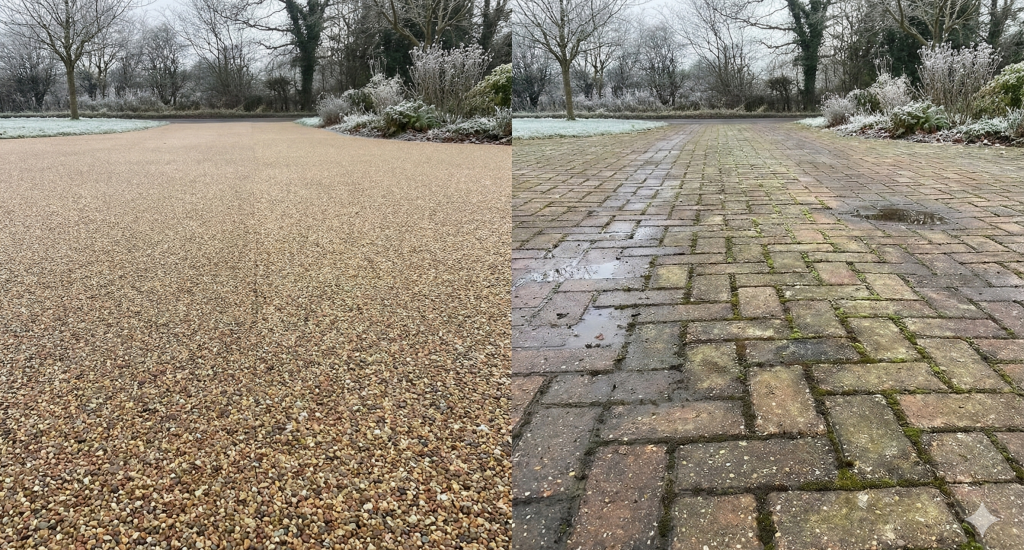
Block paving is made up of individual units held together by jointing sand. Whilst flexible by design, this structure creates natural gaps that allow water to enter. During winter, rain washes jointing sand away, leaving voids between blocks.
Once moisture enters these gaps, freezing temperatures force blocks apart. This results in uneven surfaces, loose edges, and trip hazards. Even well-laid block paving often requires regular re-sanding and maintenance to remain stable through winter.
Resin Surfaces Are Fully Bonded, Not Sectioned
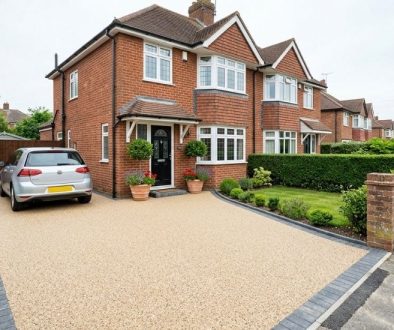
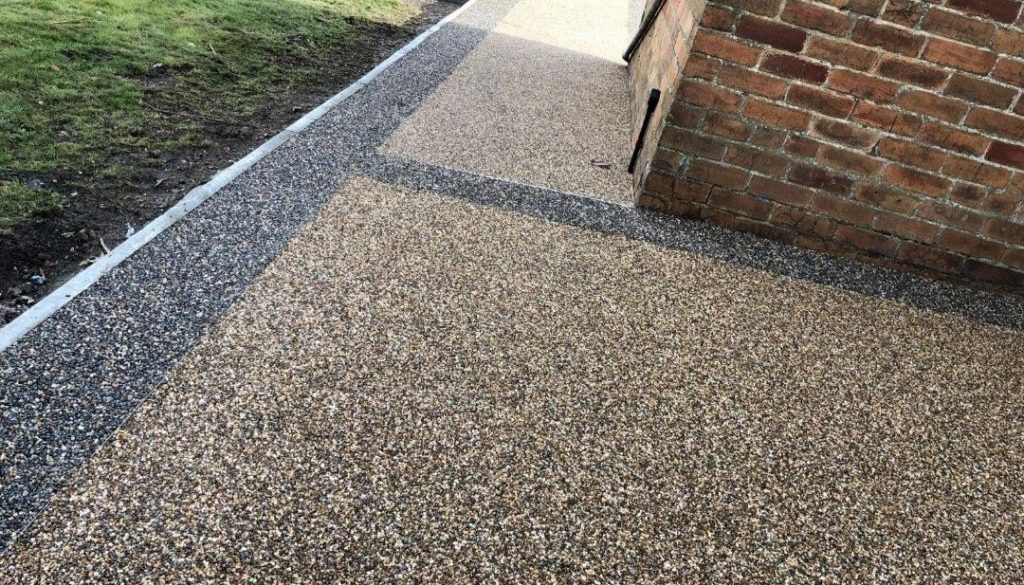
Unlike block paving, resin-bound surfaces form a single, continuous layer. Natural aggregates are mixed with resin and bonded together, creating a smooth, solid surface without joints.
This bonded structure significantly reduces the number of entry points for water. Without gaps between individual units, there is far less opportunity for moisture to penetrate and freeze beneath the surface. The result is a driveway or pathway that remains stable and level throughout winter.
Permeability Helps Resin Drain Water Quickly
One of resin’s biggest advantages is permeability. Water passes through the surface and drains into the base below rather than sitting on top. This reduces surface water, puddling, and ice formation.
Block paving can be permeable when installed correctly, but only if joints remain intact. Once jointing sand washes out, water flow becomes unpredictable. Resin’s consistent permeability ensures effective drainage even during prolonged rainfall.
Reduced Risk of Ice Formation on Resin Surfaces
Because water drains through resin-bound surfaces rather than pooling, there is less opportunity for ice to form. This makes resin driveways and paths safer during freezing mornings and evenings.
Block paving tends to hold moisture at joint level, where it freezes easily. This increases slip risk and accelerates surface deterioration. Resin surfaces dry faster, reducing both hazards and long-term damage.
Resin Handles Freeze–Thaw Cycles More Effectively
Resin-bound systems are designed to accommodate natural expansion and contraction without cracking. The bonded aggregate structure absorbs movement more evenly across the surface.
Block paving relies on joint flexibility, which weakens once sand erodes. Without consistent joint support, freeze–thaw cycles quickly compromise stability. Resin’s uniform composition allows it to resist these cycles far more effectively.
Maintenance Demands Are Lower Through Winter
Winter maintenance for block paving often includes re-sanding joints, clearing moss, and addressing movement as it occurs. These tasks are essential to prevent worsening damage but require ongoing attention.
Resin surfaces require far less intervention. Occasional sweeping and debris removal are usually sufficient. With fewer joints and no loose materials, resin remains low-maintenance even during wet and freezing conditions.
Longevity and Structural Performance Over Time
Repeated winter stress shortens the lifespan of many surfaces. Block paving often needs periodic lifting, re-levelling, and re-sanding to maintain appearance and safety. Over time, these maintenance costs add up.
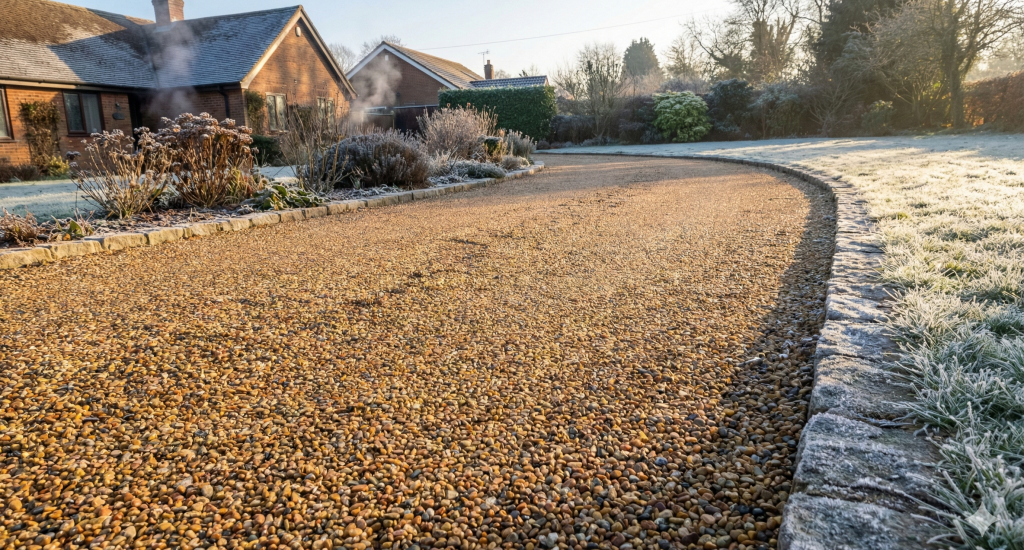
Resin-bound surfaces maintain their structure for years when installed correctly. Their resistance to water ingress and frost damage helps preserve both surface appearance and base integrity, offering better long-term value.
Appearance Stays Consistent Through Winter
Winter grime, moss, and algae often collect in block paving joints, affecting appearance. Uneven blocks become more noticeable as surfaces shift.
Resin-bound driveways retain a clean, uniform look throughout winter. With no joints to trap debris, the surface remains visually consistent and easier to keep tidy during darker months.
Installation Quality Still Matters
Whilst resin performs better in winter, correct installation is essential. A properly prepared sub-base, correct resin mix, and suitable drainage system are critical to long-term performance.
Poor installation can compromise any surface, regardless of material. Professional groundwork ensures resin’s winter benefits are fully realised and prevents premature failure.
Choose the Right Winter-Ready Surface with Ominiworks
Winter conditions quickly reveal the strengths and weaknesses of outdoor surfaces. Whilst block paving can struggle with frost-related movement and maintenance demands, resin-bound systems offer superior drainage, stability, and durability during cold months.
Ominiworks installs high-quality resin-bound surfaces designed for year-round performance. Our expert preparation and installation ensure your driveway or pathway remains safe, attractive, and resilient through winter frost and beyond.
Upgrade to a winter-ready surface—contact Ominiworks today for professional advice and resin installation built to last.