
LANDSCAPING ADVICE
Front Garden Driveway Ideas That Make Your Home Work Better

A front garden can be pretty, practical, or completely wasted. Many homes have a patch of grass that is hard to maintain, a narrow path that feels awkward, or a tired driveway that no longer suits daily life.
Good front garden driveway ideas should do more than create somewhere to park. They should improve access, manage rainwater, make bins easier to move, frame the house, and make the front of the property feel cleaner.
Think of the front garden as the opening page of your home. If it is cluttered, muddy, or poorly planned, the rest of the property starts on the wrong foot. A better driveway layout can change that first impression and make everyday routines easier.
Start With How the Space Is Used
Before choosing blocks, resin, gravel, or tarmac, look at how the space already works. The best driveway plan starts with movement, not materials.
Ask simple questions first:
- How many cars need regular parking?
- Do visitors need space?
- Is there safe access from the road?
- Can people reach the front door without squeezing past a car?
- Where do bins sit on collection day?
- Does rainwater pool near the house?
- Does the front garden still need planting?
These answers shape the layout. A home with two cars needs a different plan from a house that only needs occasional off-street parking. A property on a busy road may need easier turning space. A narrow frontage may need cleaner edges, lighting, and a smarter path so the space feels open rather than cramped.
Turn Dead Lawn Into Useful Parking
A small, patchy lawn often takes work without giving much back. If it is too shaded, waterlogged, or constantly crossed by people, it can become a muddy strip rather than a real garden feature.
Turning part of that space into a driveway can make sense. It can reduce street parking stress, make school runs easier, and give the home a tidier entrance.
The key is balance. Paving every inch can make the front look flat and harsh. A better approach is to combine parking with border planting, defined edges, and a clear path to the front door.
For example, one side of the garden can become a parking bay, while the other keeps a low-maintenance planted strip. This keeps the space practical without making it feel like a car park.
Plan Access Before the Surface
A driveway should feel easy to use every day. If the access is poor, even a smart new surface can become annoying.
Think about turning angles, gates, dropped kerb position, the width of the opening, and the route to the front door. A car door needs space to open. A person carrying shopping needs a clear path. Children, pushchairs, wheelchairs, and pets all affect how the space should work.
Steps and level changes matter too. If the garden slopes, the driveway may need careful grading, retaining edges, or a path that avoids awkward drops. Poor access often creates shortcuts, and shortcuts cause worn grass, broken edges, and muddy patches.
A good driveway design should guide people naturally, like a well-placed handle on a drawer. You should not have to think about how to use it.
Choose Materials That Suit the Job
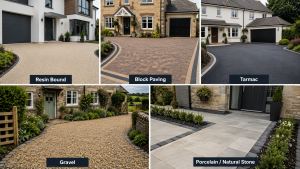
The right material depends on the property, parking needs, drainage, and the style of the home. Each option has its strengths.
Resin bound driveways give a smooth, clean finish and can work well for modern homes. They also suit spaces where a softer, neater look is wanted.
Block paving gives strong visual detail and can be repaired in sections if needed. It works well for patterns, borders, and traditional properties.
Tarmac is practical for larger areas and regular vehicle use. With good edging, it can look sharp and tidy.
Gravel can suit rural or cottage-style homes, although it needs proper containment and maintenance to keep it in place.
Porcelain or natural stone details can be used for paths, entrances, or feature zones, helping the driveway link with the rest of the home.
The finish matters, but the base matters more. Without proper excavation, compaction, drainage, and edge restraints, even an expensive surface can fail early.
Drainage Should Never Be An Afterthought
Front garden driveways need to handle water properly. Rain should not be pushed towards the house, across the pavement, or into places where it causes pooling.
Drainage should be planned before installation starts. This may include a permeable surface, water directed to a lawn or border, a soakaway where suitable, channel drainage, or carefully planned falls.
A driveway with poor drainage can create slippery patches, moss growth, frost damage, and soft spots under the surface. It can also make the front of the home feel damp and messy after heavy rain.
A smart front garden design keeps water under control while still looking clean. It is the hidden part of the job, but it has a major effect on how long the driveway lasts.
Keep Kerb Appeal in the Plan
Parking is useful, but kerb appeal still matters. A front driveway is one of the first things people notice, so the layout should suit the house rather than fight it.
Simple design choices can make a big difference:
- Add a contrasting border
- Keep planting along one side
- Use neat edging
- Match colours to brickwork or render
- Create a defined path to the front door
- Leave space for bins without making them the main feature
- Use lighting for steps and access points
A driveway should make the front look calmer and more organised. It should feel like part of the home, not a quick patch of hardstanding dropped onto the garden.
Think About Permissions Early
Some front garden driveway projects need checks before work begins. This can include planning rules, surface water requirements, conservation restrictions, and dropped kerb approval.
If cars need to cross the pavement from the road, the dropped kerb must be handled properly through the local authority. This is separate from choosing a driveway surface.
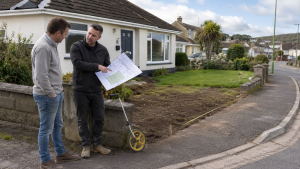
It is better to check early than discover a problem after materials, measurements, and dates have already been discussed. A proper site visit can help identify what needs checking before work starts.
Common Mistakes to Avoid
Many front garden driveways fail because the plan is rushed. The surface may look fine on day one, then problems appear after rain, traffic, or regular use.
Avoid these mistakes:
- Paving the whole garden without drainage planning
This can leave water with nowhere sensible to go. - Forgetting pedestrian access
A driveway should still let people reach the door safely and comfortably. - Choosing materials by price alone
Cheaper work can cost more later if the base, edging, or finish fails. - Ignoring boundaries and fence lines
Loose edges, weak borders, and awkward gaps can make the whole area look unfinished. - Leaving bins as an afterthought
Bin storage affects how clean the front looks every week.
Good planning prevents these issues before they become expensive.
How Ominiworks Can Help
At Ominiworks, our team helps homeowners turn wasted front garden space into useful, attractive driveways that suit everyday life. We look at parking, access, drainage, groundwork, materials, and the final finish before recommending the right option.
Whether your front garden needs a full driveway conversion, a wider parking area, better drainage, new edging, or a cleaner entrance, the aim is always the same: a front space that works properly and looks right for the home.
A strong driveway starts below the surface. That is why proper preparation, levels, and installation matter as much as the finish you see.
Make the Front of Your Home Easier to Live With
Your front garden should make life easier, not add extra work. If the grass is wasted, the parking is awkward, or the entrance looks tired, a new driveway can give the space a clear purpose.
The right plan can improve parking, create safer access, manage rainwater, and give your home stronger kerb appeal from the street.
Speak to Ominiworks to plan a driveway that works from the ground up. Call 0800 999 1367 or visit ominiworks.co to book your free site visit.
COMMON QUESTIONS
Your questions answered
What should I know about start with how the space is used?
Before choosing blocks, resin, gravel, or tarmac, look at how the space already works. The best driveway plan starts with movement, not materials.
What should I know about turn dead lawn into useful parking?
A small, patchy lawn often takes work without giving much back. If it is too shaded, waterlogged, or constantly crossed by people, it can become a muddy strip rather than a real garden feature.
What should I know about plan access before the surface?
A driveway should feel easy to use every day. If the access is poor, even a smart new surface can become annoying.
How should drainage be planned?
Front garden driveways need to handle water properly. Rain should not be pushed towards the house, across the pavement, or into places where it causes pooling.
What should I know about keep kerb appeal in the plan?
Parking is useful, but kerb appeal still matters. A front driveway is one of the first things people notice, so the layout should suit the house rather than fight it.
What should I know about think about permissions early?
Some front garden driveway projects need checks before work begins. This can include planning rules, surface water requirements, conservation restrictions, and dropped kerb approval.
What should I know about common mistakes to avoid?
Many front garden driveways fail because the plan is rushed. The surface may look fine on day one, then problems appear after rain, traffic, or regular use.
What should I consider before starting?
A front garden can be pretty, practical, or completely wasted. Many homes have a patch of grass that is hard to maintain, a narrow path that feels awkward, or a tired driveway that no longer suits daily life.
Planning work at your property?
Send the postcode, photographs and a short description. OMINIWORKS will explain the appropriate next step.
Request a site survey