Best Paving Ideas for Sloped Gardens in Barnstaple
A sloped garden can look full of potential, but in daily use it often becomes awkward. The ground may be too uneven for seating, too slippery after rain, or too difficult to walk across comfortably. Some homeowners also find that water always runs to the same problem area, leaving the garden muddy or hard to maintain.
The best sloped garden paving in Barnstaple is not about forcing a flat design onto a difficult outdoor space. It is about working with the levels, creating safer routes, improving drainage, and choosing materials that suit how the garden will actually be used.
A sloped garden can become:
- A raised patio for seating
- A stepped route through the garden
- A terraced outdoor space
- A low-maintenance paved garden
- A mix of paving, planting, and raised beds
- A safer route to a shed, gate, or lower garden area
Why Sloped Gardens Need a Different Approach
A flat garden gives you more flexibility. A sloped garden needs more careful thinking because every decision affects safety, drainage, stability, and comfort.
Before choosing paving materials, it helps to look at the practical problems first.
Common issues with sloped gardens include:
- Water running toward the house
- Muddy or slippery access routes
- Uneven areas that cannot hold furniture
- Wasted garden space that is hard to use
- Soil or gravel moving downhill
- Steps that feel too steep or unsafe
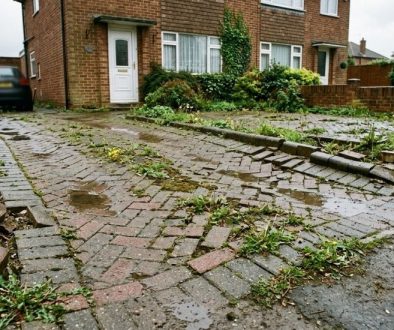
- Paving that may shift if the base is not prepared properly
For many Barnstaple homeowners, the best result comes from combining level areas, strong edges, safe steps, and proper drainage.
1. Raised Patios Create a Proper Seating Area
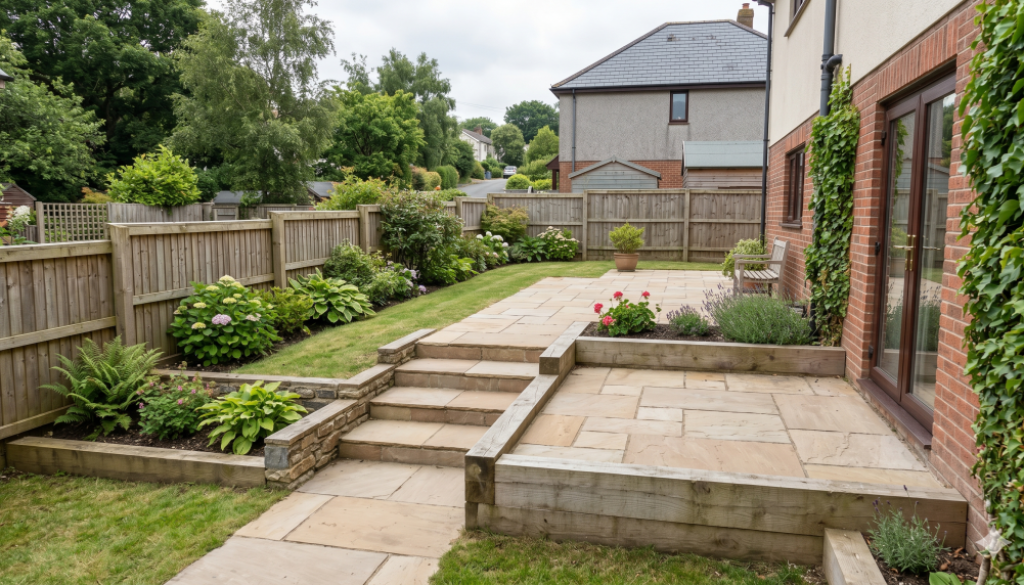
A raised patio is one of the most useful paving ideas for a sloped garden. If the garden drops away from the house, a raised section can create a flat space for dining, seating, or relaxing outside.
This works well when you want the patio to feel connected to the home. Instead of stepping straight onto a muddy slope, you get a stable paved area that feels like a natural extension of the indoor living space.
A raised patio can be used for:
- Outdoor dining
- A small seating area
- A barbecue space
- A family garden zone
- A cleaner transition from the house to the garden
Porcelain paving, natural stone, and concrete paving slabs can all work for raised patios. The right choice depends on the style of the home, budget, and maintenance preferences.
The structure underneath matters most. Raised patios may need retaining edges, steps, drainage, and solid groundwork so the finished surface stays safe and stable.
2. Terraced Levels Make Steep Gardens Easier to Use
For steeper gardens, one large paved area may not be the best option. Terracing can divide the slope into smaller, more useful levels.
Instead of fighting the slope, terracing works with it.
A simple terraced layout might include:
- Top level: A patio near the house
- Middle level: Raised beds or a small seating spot
- Lower level: Storage, planting, or a quiet garden corner
- Connecting route: Steps or a paved pathway between each level
This approach helps stop the garden from feeling like one long, difficult slope. Each level has a purpose, and the whole space becomes easier to understand.
Terraced paving also gives more room for planting. Raised beds, retaining walls, and borders can soften the hard landscaping so the garden still feels natural.
3. Garden Steps Should Feel Safe and Comfortable
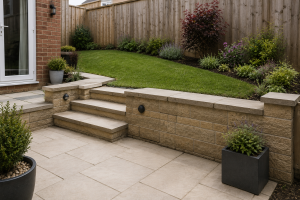
Steps are often needed in sloped gardens, but they should never feel like an afterthought. Poorly planned steps can make a garden harder to use, especially when the surface is wet.
Good garden steps should have:
- Consistent height
- Enough width for comfortable use
- A surface with suitable grip
- Clear edges
- Good connection to patios and paths
- Lighting where needed
- Support or handrails on steeper sections
4. Curved Pathways Can Soften a Steep Garden
A straight path is not always the best choice for sloped ground. In some gardens, a direct route can feel too steep or too harsh. A curved or angled path can make the garden feel more relaxed and easier to move through.
Curved pathways are useful because they can:
- Break up the look of a steep slope
- Guide movement through the garden
- Connect patios, sheds, gates, or seating areas
- Make the layout feel less boxy
- Create space for planting along the edges
For informal gardens, stepping-stone paving may work if the route is used lightly. For everyday access, a solid paved path is usually better.
Block paving, natural stone, and textured slabs can all suit garden pathways. Whatever material is used, edging is important. Without a clear edge, soil, gravel, or planting can spill into the path over time.
5. Retaining Edges Help Hold the Design Together
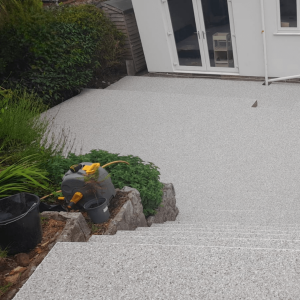
Sloped gardens often need retaining edges to keep everything in place. These edges help support level changes, hold back soil, define paved areas, and stop the garden from losing shape.
Retaining features can include:
- Low retaining walls
- Block edging
- Stone borders
- Raised beds
- Sleeper-style borders
- Brick or concrete edges
In smaller gardens, retaining edges can also become part of the design. A raised bed beside a patio can hold planting while giving the paving a neat finish. A low wall beside steps can make the route feel more secure.
Drainage Must Be Planned Before Paving
Drainage is one of the biggest considerations for sloped garden paving. Rainwater naturally moves downhill, so the design needs to control where it goes.
Poor drainage can lead to:
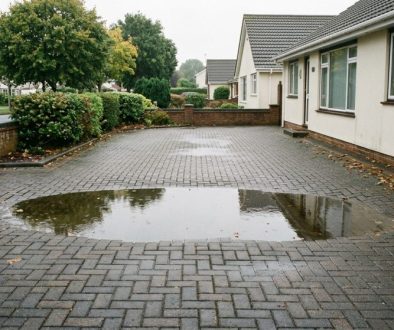
- Puddles at the bottom of the slope
- Water sitting near the house
- Slippery steps or paths
- Soil washing onto paved areas
- Damage to planting beds
- Damp, unusable corners of the garden
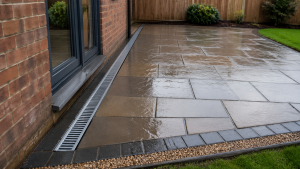
Good drainage planning may include correct falls, drainage channels, gravel borders, permeable paving, or a layout that moves water away from the property.
Resin-bound paving can be useful in some spaces where permeability and a smooth finish are priorities. However, no material solves drainage on its own. The base, levels, edges, and surrounding ground all need to work together.
Raised Beds Add Planting Without Losing Control
Too much paving can make a sloped garden feel hard or plain. Raised beds help soften the layout while still keeping the garden manageable.
They work especially well:
- Beside steps
- Along retaining edges
- Around a raised patio
- Between terraced levels
- Against fencing or boundary walls
Raised beds can also reduce the amount of awkward sloped lawn that needs mowing. For a low-maintenance garden, they can be planted with shrubs, grasses, herbs, or hardy perennials.
Lighting Makes Level Changes Safer
Lighting is easy to forget, but it matters in sloped gardens. Steps, raised patios, and narrow paths can become difficult to use after dark if the edges are not visible.
Useful lighting ideas include:
- Step lights for level changes
- Low pathway lights for safer access
- Wall lights beside raised patios
- Soft lighting around seating areas
- Subtle lighting near retaining walls
The aim is not to make the garden too bright. It is to show where the routes, edges, and changes in level are.
Speak to a Local Barnstaple Paving Contractor
For homeowners looking to improve a sloped garden, patio, pathway, or paved outdoor area, Ominiworks offers local support through its paving company in Barnstaple service.
A survey can help identify what is realistic for the garden, what preparation is needed, and which paving ideas will make the space safer, neater, and easier to use.
Make a Sloped Garden Work Harder
A sloped garden does not have to stay awkward, muddy, or difficult to enjoy. With the right paving ideas, it can become a practical outdoor space with safer access, better drainage, proper seating, and a layout that suits the home.
Contact Ominiworks to arrange a free survey and discuss paving ideas for your Barnstaple garden.