Is Your Fence Ready for Winter Storms? What to Check Before Damage Starts
Winter storms place enormous strain on garden fencing. High winds, heavy rain, and saturated ground combine to loosen posts, weaken fixings, and expose structural flaws that may have gone unnoticed during calmer months. What begins as a slight lean or rattle in early winter can quickly escalate into collapsed panels or snapped posts once storms intensify.
Checking your fence before winter weather peaks helps prevent avoidable damage, protects surrounding landscaping, and avoids emergency repairs during the coldest months. A few targeted inspections now can significantly extend the lifespan of your fencing.
Why Winter Storms Are So Damaging to Fences
Strong winds are the most obvious threat, but waterlogged ground is often the underlying cause of fence failure. As soil becomes saturated, it loses the strength needed to hold posts firmly in place. Even well-built fences can shift if post foundations are compromised by prolonged rain.
Repeated wind pressure on already weakened posts increases movement. Over time, fixings loosen, panels flex, and stress fractures develop in timber or concrete posts. Winter storms expose these vulnerabilities rapidly, particularly in exposed gardens or boundary lines.
Check Fence Posts First — They Carry the Load
Fence posts provide the structural backbone of the entire system. If posts are loose, leaning, or showing signs of rot, the fence will struggle to withstand storm conditions. Gently push each post to check for movement at ground level. Any give indicates a compromised foundation.
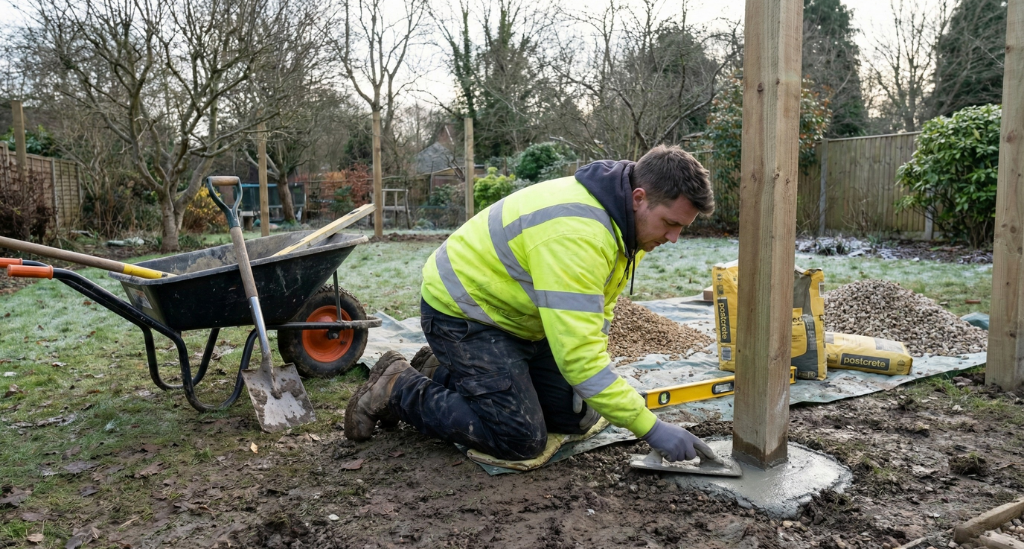
Timber posts are especially vulnerable if they were not treated properly or installed without adequate concrete footings. Water penetration accelerates decay below ground, weakening the post where damage is hardest to see.
Inspect Panels for Weakness and Wind Damage
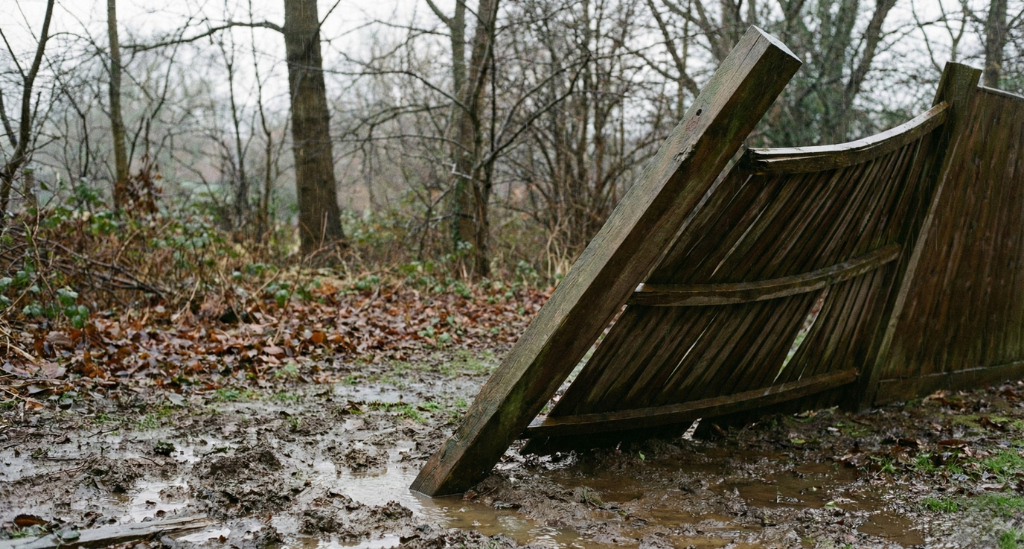
Fence panels act like sails in strong winds. Cracked slats, warped boards, or loose fixings reduce their ability to resist pressure. Once a panel begins to flex excessively, it places additional strain on the posts at either end.
Check for splitting timber, missing nails or screws, and panels that rattle in the wind. Repairing or replacing weakened panels before winter storms arrive reduces the risk of total fence failure during severe weather.
Examine Fixings, Rails, and Connection Points
Fixings are often overlooked, yet they play a critical role in fence stability. Screws, nails, brackets, and rails absorb much of the movement caused by wind. Over time, corrosion and vibration loosen these connections.
Inspect rails where they attach to posts and ensure fixings are tight and rust-free. Replacing old fasteners with weather-resistant alternatives strengthens the fence and improves its ability to withstand repeated storm stress.
Look for Signs of Rot at Ground Level
Rot typically begins where posts meet the soil. This area stays damp throughout winter and is rarely visible without close inspection. Soft timber, flaking surfaces, or darkened wood indicate decay.
Once rot takes hold, posts lose structural strength rapidly. Even moderate winds can cause failure. Addressing rot early—either by repairing or replacing affected posts—prevents wider fence collapse.
Check Fence Alignment After Heavy Rain
After prolonged rainfall, check whether your fence line remains straight. Subtle shifts may not be noticeable at first but indicate soil movement beneath the posts.
Early realignment or reinforcement prevents further leaning. Ignoring minor movement often results in greater displacement during subsequent storms, making repairs more extensive and costly.
Remove Nearby Hazards Before Storms Hit
Loose garden items such as pots, furniture, and bins can be blown into fencing during storms. These impacts often cause panel damage or loosen fixings further.
Securing or removing nearby objects before storms reduces the risk of accidental damage. Keeping fence lines clear allows wind to pass more freely and limits unnecessary stress on the structure.
Check Fence Posts First — They Carry the Load
Fence posts provide the structural backbone of the entire system. If posts are loose, leaning, or showing signs of rot, the fence will struggle to withstand storm conditions. Gently push each post to check for movement at ground level. Any give indicates a compromised foundation that should be addressed during a winter fence inspection.
Timber posts are especially vulnerable if they were not treated properly or installed without adequate concrete footings. Water penetration accelerates decay below ground, weakening the post where damage is hardest to see.
Why Small Repairs Now Prevent Major Damage Later
Replacing a single post or reinforcing fixings now is far simpler than dealing with a collapsed fence in winter. Emergency repairs are more difficult in wet, cold conditions and often cost more due to urgency.
A proactive winter fence inspection allows minor issues to be identified and resolved before storms expose them. Preventative maintenance extends fence lifespan and maintains boundary security throughout winter, protecting both the fence and surrounding areas.
Prepare Your Fence for Winter with Ominiworks
Winter storms test the strength of every fence. By checking posts, panels, fixings, and foundations before severe weather arrives, you reduce the risk of damage and costly repairs.
Ominiworks provides professional fencing inspections, repairs, and replacements designed to withstand harsh winter conditions. Our team ensures fences are structurally sound, properly supported, and built for long-term durability.
Secure your boundaries before storms strike—contact Ominiworks today for expert fencing services and winter-ready solutions.