Why Ground Conditions Matter More Than Materials In Outdoor Builds
When planning a patio or driveway, most homeowners focus on materials first. Porcelain or sandstone? Block paving or resin? Smooth finish or textured?
Materials matter. But they are not the foundation of success.
Ground conditions in outdoor builds determine whether that beautiful surface remains stable for decades or begins shifting within months. Soil type, drainage behaviour, moisture retention, and compaction quality influence performance far more than colour or pattern.
If the ground beneath fails, the surface above follows.
The Hidden Layer That Controls Everything
Outdoor builds are structural projects. They rely on stable support below the visible surface.
Beneath every patio or driveway sits:
- Excavated subgrade
- Compacted sub-base
- Bedding layer
- Drainage system
These layers interact directly with the natural soil.
If ground conditions are unstable, reactive, or poorly compacted, no premium material can compensate for structural weakness.
Imagine placing polished porcelain tiles on a mattress. The surface may look perfect, but movement underneath will eventually cause cracking and separation. The same principle applies outdoors.
How Soil Type Influences Stability
Different soil types behave differently under pressure and moisture.
Clay Soil
Clay expands when wet and shrinks when dry. This movement creates stress beneath rigid surfaces.
Without proper depth and compaction, patios built on clay-heavy soil can experience:
- Heaving in winter
- Shrinking gaps in summer
- Uneven settlement
Clay requires careful preparation and adequate sub-base thickness to distribute load evenly.
Sandy Soil
Sandy soil drains well but can shift easily if not compacted thoroughly.
While it is less prone to expansion, it requires layered compaction to prevent movement under vehicle weight or heavy foot traffic.
Mixed or Made-Up Ground
Some properties sit on previously disturbed or filled land. This can include construction debris, loose aggregate, or inconsistent soil composition.
Made-up ground is unpredictable. It often demands deeper excavation and stabilisation before installation begins.
Ground conditions in outdoor builds should always be assessed before material selection.
Drainage Is Dictated by the Ground
Drainage is not only about surface slope. It is influenced heavily by soil permeability.
If natural soil retains water, drainage planning must compensate.
Without proper water management:
- Sub-base becomes saturated
- Load-bearing capacity reduces
- Freeze-thaw cycles accelerate damage
Even high-performance materials cannot resist long-term structural stress caused by trapped moisture.
A well-built patio manages water below the surface as carefully as above it.
Compaction: The Most Overlooked Step
Compaction determines how soil and sub-base respond to weight and weather.
Insufficient compaction leads to:
- Settlement
- Rocking slabs
- Cracked joints
- Surface undulation
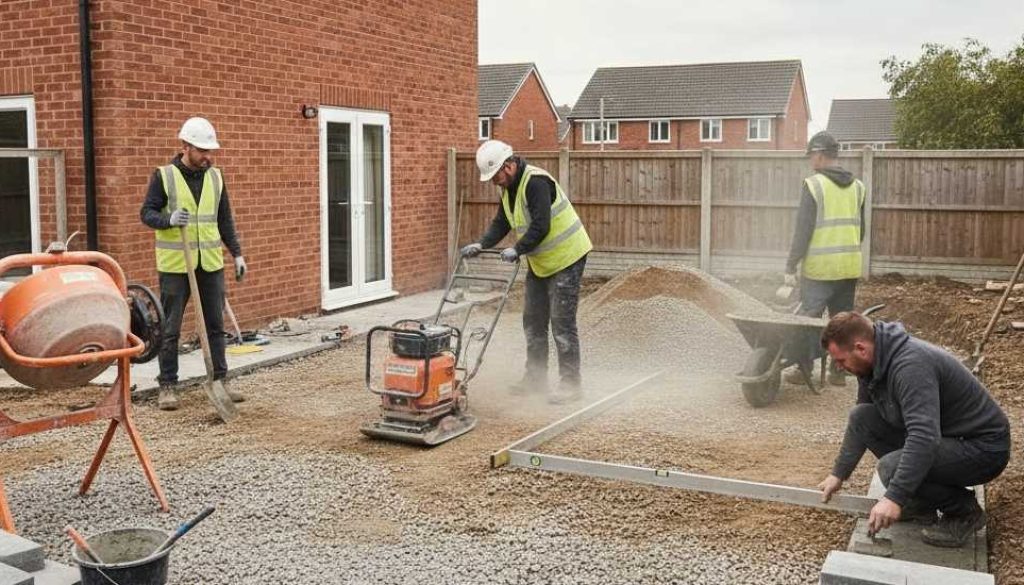
Proper compaction is done in layers, using professional equipment, not quick passes.
Speed is the enemy of stability. A rushed installation often shortens compaction time to accelerate completion.
Ground conditions in outdoor builds demand patience. Compaction is not visible once finished, yet it determines longevity more than the paving choice itself.
Why Premium Materials Cannot Fix Poor Groundwork
Homeowners sometimes assume that choosing thicker slabs or higher-end materials solves structural risk.
It does not.
Porcelain, sandstone, or concrete slabs all rely on the same underlying support system.
When the ground shifts, rigid materials crack. When the sub-base settles unevenly, joints open. When drainage fails, water infiltrates.
Materials enhance appearance and durability. They do not replace structural preparation.
Investing heavily in surface material while neglecting ground preparation is like buying expensive tyres for a car with a damaged suspension. Performance still fails.
Signs Ground Conditions Were Ignored
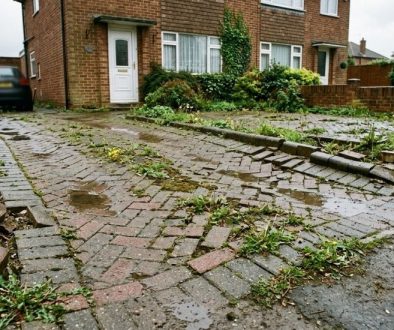
Early failure signs often indicate inadequate assessment of soil or sub-base.
Watch for:
- Small dips forming within months
- Cracks along edges
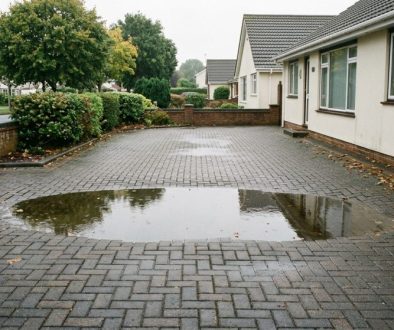
- Persistent standing water
- Loose edging restraints
- Movement underfoot
These symptoms usually originate below the surface. Correcting them often requires full removal and reconstruction, not minor repairs.
When Ground Conditions Demand Design Adjustments
Sometimes the solution is not simply deeper excavation. Ground behaviour may influence design decisions.
Adjustments can include:
- Increased sub-base depth
- Geotextile membrane installation
- Drainage channels or soakaways
- Reinforced edging
- Retaining structures on slopes
Ignoring these adjustments reduces cost initially but increases risk significantly. Outdoor construction is responsive work. It adapts to the land rather than forcing a surface onto it.
A Brief Note on Bath Patios and Ground Realities
In historic areas with varied terrain and older property foundations, ground assessment becomes even more important.
When considering Bath patios, soil composition and slope conditions can vary significantly between properties. Some gardens sit on natural gradients, while others may have previously altered ground levels.
A surface that complements traditional stone architecture must also sit on a stable, well-prepared base. Heritage surroundings do not reduce structural requirements. If anything, they increase the need for careful planning.
The principle remains the same everywhere: the land dictates the build.
The Cost Implications of Ignoring the Ground
Poor ground assessment leads to:
- Premature replacement
- Structural water damage
- Additional excavation
- Labour duplication
- Material wastage
Rebuilding a failed patio costs more than installing it properly once.
Ground conditions in outdoor builds influence not only structural performance but long-term financial outcome.
A properly assessed and prepared base reduces maintenance, prevents major repairs, and protects property value.
How Professionals Assess Ground Conditions
Experienced installers do not begin with slab selection. They begin with assessment.
This includes:
- Inspecting soil composition
- Checking for signs of water retention
- Measuring levels and fall
- Identifying made-up or disturbed ground
- Determining required excavation depth
Only after understanding the land does material selection follow. Surface design sits at the top of a layered decision process.
Build From the Ground Up
Outdoor builds succeed when structure leads and aesthetics follow.
Ground conditions influence stability, drainage, lifespan, and long-term cost. Materials refine the finish, but preparation determines performance.
At Ominiworks, every project begins with ground assessment before material selection. Soil type, drainage behaviour, excavation depth, and compaction standards are evaluated carefully to ensure your patio or driveway is built on a stable foundation.
That approach prevents premature movement, protects your investment, and avoids the cycle of repairs that often follows rushed installations.
If you are planning a new patio or driveway and want it built properly from the ground up, speak with the Ominiworks team and arrange a detailed site survey. Strong surfaces start below the surface.