Skip to content

Winter-Proof Driveways: How to Prevent Cracks, Shifts and Surface Damage
Winter places enormous pressure on driveways. Between frost, rain, fluctuating temperatures, and constant vehicle use, even small weaknesses can turn into costly damage. Cracks widen, joints loosen, surfaces lift, and poor drainage becomes obvious once persistent rain arrives. Preparing your driveway before the cold weather sets in is essential for long-term durability.
Whether your surface is resin, block paving, or tarmac, winter-proofing is not just about appearance—it protects the foundations beneath. A few targeted steps taken now will help prevent expensive repairs, maintain structural integrity, and keep your driveway safe to use throughout the season.
Inspect the Surface Early in the Season
A full driveway inspection is the starting point for reliable winter protection. Early autumn gives enough time to identify problem areas before frost arrives. Look for cracks, uneven patches, loose blocks, or areas where water tends to settle after rain. These early warning signs indicate deeper issues such as worn sealant, joint erosion, or base movement.
Small cracks may look harmless, but they encourage water penetration. Once temperatures drop, trapped moisture freezes and expands, forcing cracks to spread. Surface dips can create puddles that repeatedly freeze and thaw, increasing the risk of long-term structural movement. Addressing visible defects before winter helps prevent more extensive deterioration.
Clean Away Debris, Leaves, and Moss
Driveway maintenance always begins with cleaning. Wet leaves trap moisture against the surface, stain resin and paving, and create the perfect environment for moss and algae. If left untreated, organic build-up encourages slippery conditions and accelerates surface breakdown.
Use a stiff brush, leaf blower, or pressure washer to keep the surface clear. For block paving, remove debris from joints to prevent sand displacement. Resin and tarmac surfaces benefit from light pressure washing to remove grime. Keeping the driveway clean reduces moisture retention and prepares it for sealing or repair work.
Seal to Prevent Water Penetration
A protective sealant is one of the most effective ways to winter-proof a driveway. Sealers act as a barrier against moisture, oil, salt, and frost damage. Different surfaces require different products, but the goal is the same: stop water from reaching the vulnerable layers below.
- Block paving benefits from a breathable acrylic or polyurethane sealer to strengthen the surface and reduce water absorption.
- Resin driveways can receive a UV-stable topcoat that restores colour vibrancy and enhances resistance to staining.
- Tarmac is best protected with a rejuvenation coating that fills micro-cracks and prevents surface brittleness.
Applying sealant in mild, dry weather ensures proper curing. A perfectly sealed surface resists frost damage far better than untreated areas.

Strengthen and Re-Sand Block Paving Joints
Block paving relies on the stability of its joints. Over time, rain, sweeping, and vehicle movement cause the kiln-dried sand between blocks to wash away. Without support, blocks shift, creating gaps where water collects and freezes.
Autumn is the ideal time to re-sand joints. Brushing in fresh kiln-dried sand stabilises each block, strengthens the surface, and reduces the risk of movement during winter freezes. In areas where weeds or moss have taken hold, a joint stabiliser or sealant can lock sand in place and protect the surface further.
Check and Improve Drainage Before Frost Sets In
Poor drainage is one of the fastest ways to damage a driveway during winter. Standing water seeps into cracks, freezes, and forces the surface apart. Detecting puddles after rainfall helps identify drainage issues early.
Solutions depend on the driveway layout:
- Small dips can be repaired with patching or levelling compounds.
- Larger pooling areas may require changes to the sub-base or slope.
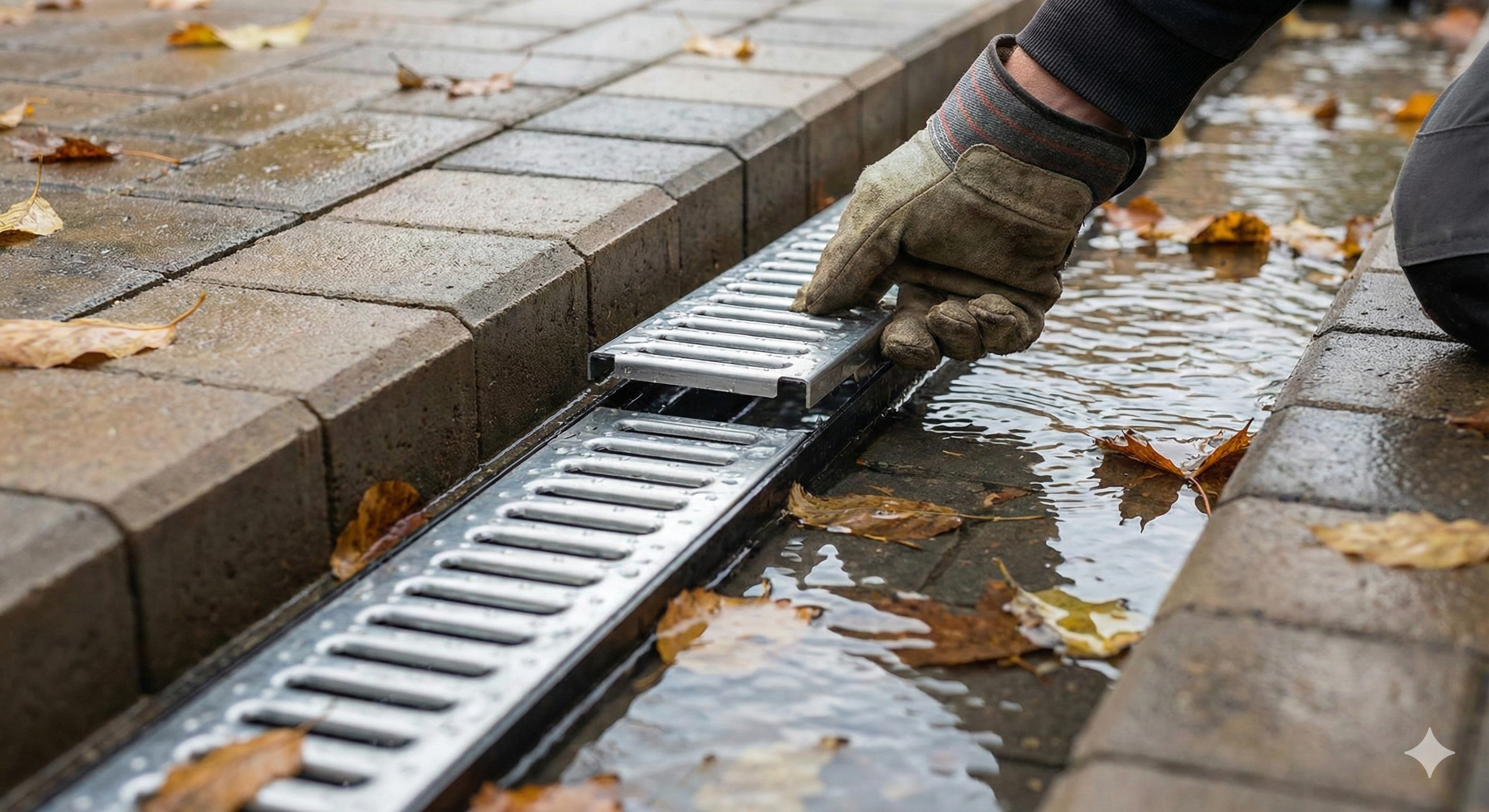
- Driveways that meet garages or low-lying areas benefit from channel drains or linear gullies.
Ensuring water flows away from the surface is vital in preventing frost-related expansion and long-term erosion.
Repair Cracks and Surface Defects Promptly
Cracks allow water to penetrate deeper layers, speeding up freeze-thaw damage. Hairline cracks can be filled with resin-based or asphalt fillers, while larger faults may require cutting out and replacing individual sections.
For block paving, replacing damaged blocks is straightforward and ensures the whole surface remains structurally sound. Resin and tarmac driveways may require professional resurfacing if the damage is widespread. Addressing these issues now ensures they do not expand under winter stress.
Reinforce Edges and Borders
Driveway edges are particularly vulnerable during cold months. When blocks or tarmac edges begin to crumble or spread, the structure loses support. This makes the surface more susceptible to movement and cracking.
Installing or repairing edging stones, kerbs, or concrete haunching provides a firm boundary that resists vehicle pressure and seasonal shifts. Reinforced edges also prevent water ingress around the perimeter, helping maintain a stable sub-base throughout winter.
Add Anti-Slip Protection for Safety
Colder months increase the risk of slippery surfaces due to frost, wet leaves, and algae. Applying an anti-slip additive to resin sealants or brushing fine grit over fresh block paving sealant increases traction.
For properties with shaded driveways, installing low-level LED lighting can help illuminate icy patches and improve visibility. Safety improvements like these are simple but highly effective during winter mornings and evenings.
Upgrade with Smart Features That Improve Performance
Winter-proofing doesn’t stop at maintenance. Small upgrades can significantly improve how your driveway handles seasonal weather:
- Permeable paving options reduce surface water build-up.
- Trench drains or ACO channels manage heavy rainfall efficiently.
- Driveway lighting improves safety and visibility.
- Professional resurfacing strengthens worn or ageing surfaces.
Integrating these features enhances both performance and kerb appeal, especially for homeowners planning long-term improvements.
Rely on Expert Installation for Long-Term Durability
Even the best materials fail without proper installation. Winter-proofing is most effective when the driveway is built on stable foundations with correct compaction, drainage, and edging. Professional installers assess the entire system—from sub-base to finish—to ensure every layer is prepared for winter conditions.
Quality workmanship prevents many issues before they start. When a driveway is installed or maintained correctly, winter weather becomes far less damaging and long-term maintenance becomes minimal.
Protect Your Driveway with Ominiworks
Winter driveway protection is an investment in safety, structure, and long-term value. By addressing small defects early and strengthening your surface before frost arrives, you ensure your driveway stays functional and attractive through the coldest months.
Ominiworks delivers expert driveway maintenance, repairs, and upgrades designed for year-round durability. Our team ensures every surface is prepared for winter with the right materials, drainage solutions, and finishing touches.
Keep your driveway strong this winter—contact Ominiworks today for professional advice and seasonal maintenance support.