Fence Privacy Ideas For Better Summer Garden Living
There is no month like July for noticing how overlooked your garden is. The evenings are long, everyone is outside, and the gaps you never thought about in winter suddenly matter. A well-planned fence changes that, turning an exposed plot into a private, comfortable spot you actually want to sit in. These fence privacy ideas look past simple kerb appeal at the height, style and strength that make a South West garden feel genuinely your own through the summer.
Get the Fence Height Right
Height is the first thing most people reach for, and it is worth knowing the rules before you build.
In England you can put up a fence up to two metres high on a rear or side boundary without planning permission. Next to a road used by vehicles the limit drops to one metre, which catches a lot of front gardens and driveway boundaries out. Go higher than these and you will usually need an application.
Height is measured from ground level, and on a sloping boundary it is taken from the higher side, so a fence that looks fine from your garden can still breach the limit on a neighbour’s lower plot. When in doubt, a quick call to your local planning office saves trouble later.
Two metres is enough to screen most seated and standing sight lines from neighbours. If you need a little more cover without breaking the height limit, a trellis topper planted with climbers lifts the effective screen while keeping the solid part within the rules. Think about what you are actually shielding, too: a seated patio needs less height than you might assume, since neighbours are rarely looking straight down from above.
Choose a Panel Style That Suits The Job
Panel style decides how private, bright and breezy your garden feels, so it deserves more thought than a quick pick at the merchant.
Your main options:
- Close-board and lap panels give full, solid privacy but block light and air.
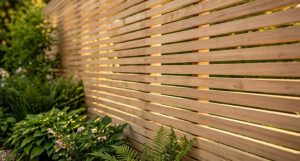
- Slatted and hit-and-miss panels have small, even gaps that screen the view while letting light and breeze through.
- Trellis and slatted toppers add height and support planting without a heavy, boxed-in feel.
Solid panels seem the obvious choice for privacy, but they can leave a small garden feeling dark and closed in. A slatted or hit-and-miss design keeps sight lines broken from a normal standing angle while letting the garden breathe, which matters most on warm, still July evenings.
Think About Wind, Not Just Sight Lines
Here is something that surprises most people: a solid fence is a poor windbreak. It throws gusts up and over, then dumps them back down in swirling eddies just where you want to sit. A solid panel only shelters a stretch two to four times its own height before the turbulence takes over.
A fence that lets roughly half the wind through does far better. A slatted or hit-and-miss panel filters the wind, calming it across a distance up to ten times its height downwind, so a two-metre screen can settle a much larger patch of garden.
In an exposed or coastal South West plot, that difference decides whether your patio is usable on a breezy day or forever catching gusts. A little porosity buys a lot of comfort, and it lets a welcome breeze through on a hot afternoon.
Do Not Skimp on Posts and Fixings
A fence is only as strong as what holds it up, and posts are where a cheap job shows first. The panels catch the wind, but the posts take the strain.
Concrete posts, or timber posts set in concrete footings, stand up to summer gusts and winter storms far better than posts simply knocked into the ground. As a rule of thumb, set posts at least 600mm into the ground, and deeper still for taller fences, so the footing can resist the leverage the wind applies at the top.
Slatted panels help here as well. By letting wind through, they put less load on the posts than a solid panel acting like a sail, which means the whole fence is less likely to lean or blow over in a gale, and it lasts longer for it.
Add Screening Above and Beyond the Fence
A fence handles the boundary, but overlooking often comes from above: an upstairs window, a raised deck next door, a slope. Screening fills the gaps a fence alone cannot reach.
A few options work well together:
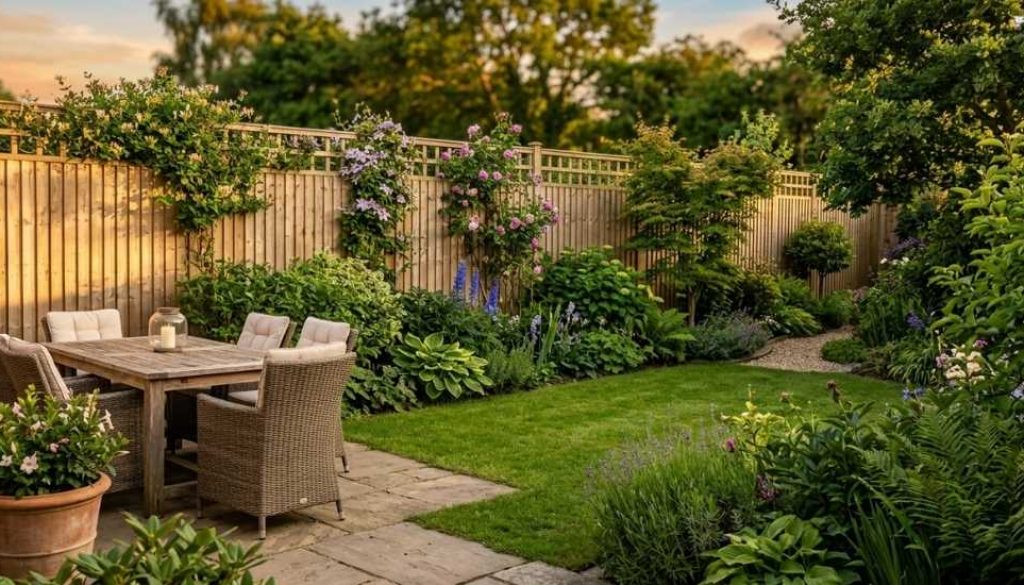
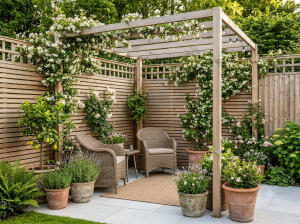
- Trellis panels with climbers such as jasmine or clematis add height and softness.
- A pergola or slatted overhead screen breaks the view from higher windows.
- Taller planting or a small multi-stem tree creates a natural screen in a key spot.
The trick is to screen only where you need it, usually the main seating area, rather than walling in the whole garden. A single well-placed screen or planted corner gives you a private nook without making the space feel like a box.
Match the Fence to Your Patio and Garden
Privacy works best when the fence looks like part of the garden rather than an afterthought bolted to the edge.
Picking a fence tone and material that sit with your paving pulls the whole space together. A warm timber slatted fence suits sandstone and planting; a darker, painted fence makes greenery stand out and quietly recedes, so the boundary feels further away. Carrying the same style around all sides reads as deliberate and calm.
It helps to plan fencing and hard landscaping together where you can, so the seating area, the screening and the surface all work as one scheme. If you are already upgrading a patio or laying new paving, it is the ideal moment to sort the boundary at the same time.
Want a garden you can relax in without an audience this summer? Ominiworks offers free surveys and quotes across the South West, so you can get the height, style and screening right first time.
FAQs