
FENCING & BOUNDARIES
Garden Fencing in Bridgwater: Privacy, Security & Style
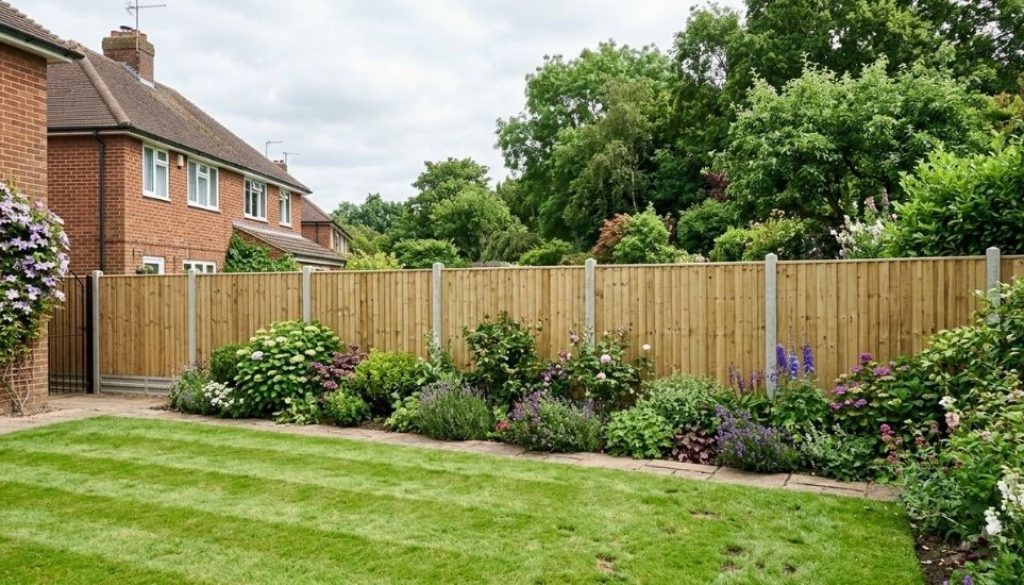
Every February, the same conversation happens across Bridgwater. A run of panels has gone over in the night, a post has snapped at ground level, and the neighbour’s trampoline is now in someone else’s garden. Fencing is the part of a garden nobody thinks about until it fails, and it almost always fails in winter.
August is the sensible month to sort it. The ground is workable, concrete cures properly, and you are fitting a fence in dry conditions rather than propping panels up in a gale. Here is what to consider if you are replacing or upgrading garden fencing in Bridgwater.
Why Fencing Takes a Beating Around Bridgwater
Two local conditions work against a garden fence here, and both affect what you should specify.
The first is wind. Bridgwater sits on low, open ground with little between it and the Bristol Channel, so south-westerly gales arrive with very little to slow them down.
The second is water. The town’s flood history is well documented, and the Environment Agency’s tidal barrier scheme on the River Parrett is being built to reduce tidal flood risk to more than 11,300 homes and 1,500 businesses. Ground that holds water in winter is ground that rots a timber post from the bottom up.
There is a useful comparison closer to home. Bridgwater’s carnival carts run to more than 15 metres long and stand several metres high, and the clubs that build them spend months on the chassis and frame rather than on the lights everyone comes to see.
They have to. A flat surface that size behaves like a sail on a November evening. A close-boarded fence panel does exactly the same job on a smaller scale, which is why the fence itself is rarely what fails. The fixing into the ground is.
Matching the Fence to the Job
Start with what you actually want the fence to do, because the answer changes the specification.
- Privacy. Close-board or overlap panels at full height, ideally with a gravel board so there is no gap at the base. Trellis on top adds height without adding much wind load.
- Security. Solid panels, concrete posts, and no horizontal rails on the outside face that could be used as a foothold. Anything above 1.8m needs a planning check.
- Wind resistance. Hit-and-miss or slatted fencing lets air pass through instead of pushing against a solid face. On exposed plots this outlasts solid panels by years.
- Appearance. Slatted contemporary panels, painted picket for front gardens, or woven willow and hazel for a softer boundary in an older property.
- Livestock, pets and children. Post-and-rail with stock netting, or solid panels with a properly buried gravel board if you have a digger of a dog.
Most gardens end up using more than one type. A solid fence on the exposed boundary and something lighter on the sheltered side is a sensible compromise rather than a design failure.
Panel quality varies far more than the price tags suggest. Two overlap panels sitting side by side in a merchant’s yard can differ in board thickness, frame section and the amount of preservative they have taken, and the cheaper one will show it within three winters. Ask what treatment level the timber carries and how thick the boards are before comparing quotes on price alone.
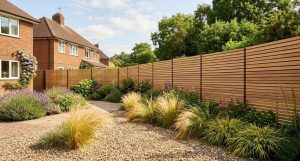
The Posts Decide How Long It Lasts
Panels are the visible part. Posts are the part that determines whether you are doing this again in six years.
Timber posts look right on traditional fences and cost less. Pressure-treated softwood set in concrete will typically give 10 to 15 years, though the failure point is always at ground level where wet and air meet.
Concrete posts cost more upfront and are less attractive, but they do not rot. Paired with a concrete gravel board, the timber panel never touches the soil, which is the single biggest thing you can do to extend a fence’s life on wet Somerset ground.
Concrete spurs are the middle option. A short concrete post is bolted to a timber post above ground level, keeping the timber clear of the damp while retaining the look.
Depth matters as much as material. As a rule, a quarter of the post’s total length should be in the ground, so a 1.8m fence wants posts set roughly 600mm deep. On waterlogged plots, a layer of hardcore at the base of the hole lets water drain away from the post rather than sit against it.
Height Rules and Boundary Etiquette
You can generally put up a fence to 2m high without planning permission, dropping to 1m where the boundary adjoins a highway used by vehicles, or a footpath beside one. Listed buildings and conservation areas carry extra restrictions, and some newer estates have covenants in the deeds that limit boundary treatments regardless of planning rules.
A few points that save arguments:
- Check your title deeds for a T-mark, which indicates which boundary you are responsible for maintaining.
- Erect the fence on your own land, not across the boundary line.
- Tell your neighbour before work starts, particularly if access to their side is needed.
- Trellis and lattice count towards the overall height, so a 1.8m fence with a 300mm topper is over 2m.
What Garden Fencing Costs in Bridgwater
As a broad guide for supply and installation, expect somewhere around:
- Overlap panel fencing: £60 to £90 per metre
- Close-board fencing: £90 to £140 per metre
- Slatted or contemporary fencing: £120 to £200 per metre
Sitting outside those figures are gates and gate posts, removal and disposal of an old fence, concrete gravel boards, difficult access, and any groundwork where old concrete footings need breaking out. Sloping boundaries also cost more, since panels have to be stepped or raked to follow the ground.
Checks Worth Doing Before Autumn
If your fence is staying put for another year, a short inspection now is worth the effort.
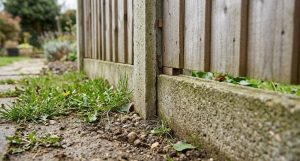
- Push each post firmly. Movement at the base means the fixing has gone, even if the timber above looks sound.
- Check the bottom 150mm of every post. Push a screwdriver into it. If it goes in easily, that post is finished.
- Clear soil and compost heaped against the fence. Anything piled against timber holds water there permanently.
- Cut back climbers and heavy growth. Ivy adds significant weight and wind resistance to a panel that was not designed for it.
- Retighten or replace rusted fixings. Galvanised or stainless fixings are worth the small extra cost on a coastal-influenced site.
- Retreat bare timber while it is dry. Cut ends and drilled holes are where preservative was lost.
Book a Free Fencing Survey in Bridgwater
Ominiworks installs, repairs and replaces garden fencing across Bridgwater, North Petherton, Puriton, Cannington and the surrounding villages, alongside our paving, patio and driveway work in the town. We survey the ground properly before quoting, because the right post specification on a wet plot is what keeps a fence standing.
Call 0800 999 1367 to book a free site visit and written quotation, or get in touch through our contact page. Recent projects are on our gallery.
COMMON QUESTIONS
Garden Fencing in Bridgwater: Privacy, Security & Style: questions answered
How should drainage be planned for garden fencing in bridgwater: privacy, security & style?
Two local conditions work against a garden fence here, and both affect what you should specify.
What should homeowners know about matching the fence to the job?
Start with what you actually want the fence to do, because the answer changes the specification.
What should homeowners know about the posts decide how long it lasts?
Panels are the visible part. Posts are the part that determines whether you are doing this again in six years.
What should homeowners know about height rules and boundary etiquette?
You can generally put up a fence to 2m high without planning permission, dropping to 1m where the boundary adjoins a highway used by vehicles, or a footpath beside one. Listed buildings and conservation areas carry extra restrictions, and some newer estates have covenants in the deeds that limit boundary treatments regardless of planning rules.
What affects the cost of garden fencing in bridgwater: privacy, security & style?
As a broad guide for supply and installation, expect somewhere around:
What should homeowners know about checks worth doing before autumn?
If your fence is staying put for another year, a short inspection now is worth the effort.
What should I consider first when planning garden fencing in bridgwater: privacy, security & style?
Every February, the same conversation happens across Bridgwater. A run of panels has gone over in the night, a post has snapped at ground level, and the neighbour’s trampoline is now in someone else’s garden. Fencing is the part of a garden nobody thinks about until it fails, and it almost always fails in winter.
What should a written quotation for garden fencing in bridgwater: privacy, security & style explain?
It should set out the preparation, materials, drainage or levels where relevant, waste removal, finish, payment stages and the work included so the scope is clear before it starts.
Planning work at your property?
Send the postcode, photographs and a short description. OMINIWORKS will explain the appropriate next step.
Request a site survey