Drainage Problems After Heavy Rain: What Your Garden Is Telling You
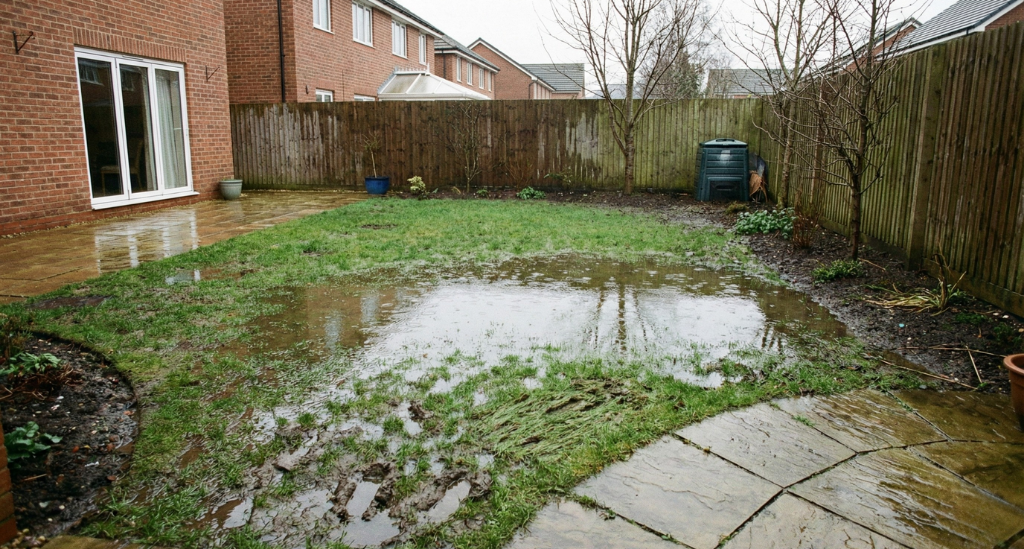
Heavy rain has a way of revealing problems that stay hidden during drier months. After prolonged rainfall, many homeowners notice water pooling on lawns, muddy borders, or patios that take far longer to dry. These are not just temporary inconveniences; they are signs that the garden is struggling to manage water effectively.
Understanding what these signs mean helps prevent long-term damage. Drainage issues rarely fix themselves. When ignored, they often worsen with each wet season, affecting soil health, planting, and nearby hard landscaping.
Pooling Water Is a Sign of Poor Drainage Flow
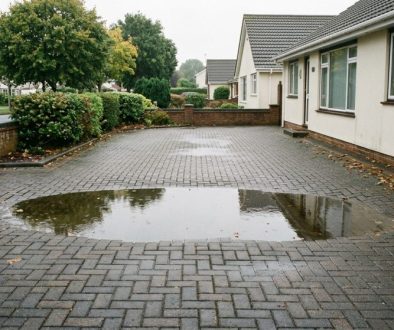
When water sits on the surface after rain, it usually means the ground cannot absorb it quickly enough. This can be caused by compacted soil, poor ground preparation, or incorrect garden levels.
Even shallow puddles are important indicators. Persistent pooling suggests water has no clear route away from the area. Over time, this leads to saturated soil, weakened roots, and increased pressure on nearby patios and paths.
Soggy Lawns Point to Compacted or Clay-Heavy Soil
Lawns that feel soft underfoot or remain waterlogged days after rainfall are often suffering from compaction. Heavy use, previous construction work, or naturally clay-rich soil reduce the space between soil particles, slowing drainage.
In winter and early spring, this problem becomes more pronounced. Compacted soil holds water at the surface, starving grass roots of oxygen and causing thinning or patchy growth.
Borders That Collapse or Wash Away Signal Excess Water
When planting borders begin to slump, wash out, or expose roots after rain, excess water is usually the cause. Flowing water carries soil away, leaving beds uneven and unstable.
This not only affects planting but also creates mess that spreads onto patios and paths. Over time, repeated erosion alters garden levels and worsens drainage problems elsewhere.
Patios and Paths Can Redirect Water the Wrong Way
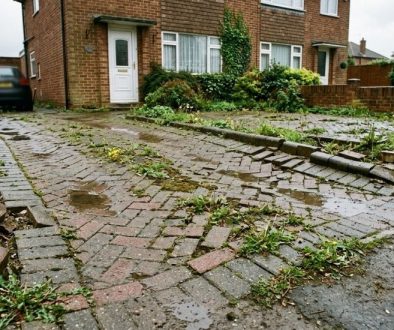
Hard landscaping changes how water moves through a garden. If patios or paths are laid without correct falls or drainage consideration, they can push water toward lawns and borders rather than away from them.
After heavy rain, water collecting along patio edges or running into garden beds is a clear sign that surface levels are working against natural drainage. Left unchecked, this leads to soil saturation and undermines the stability of nearby paving.
Drainage Issues Often Get Worse Over Time
Once drainage problems appear, they rarely stay the same. Saturated soil becomes more compacted, reducing absorption further. Plant roots weaken, and hard landscaping begins to feel the effects of constant moisture beneath the surface.
Each period of heavy rain compounds the issue. What starts as occasional pooling can develop into widespread waterlogging if not addressed properly.
Why Temporary Fixes Rarely Work
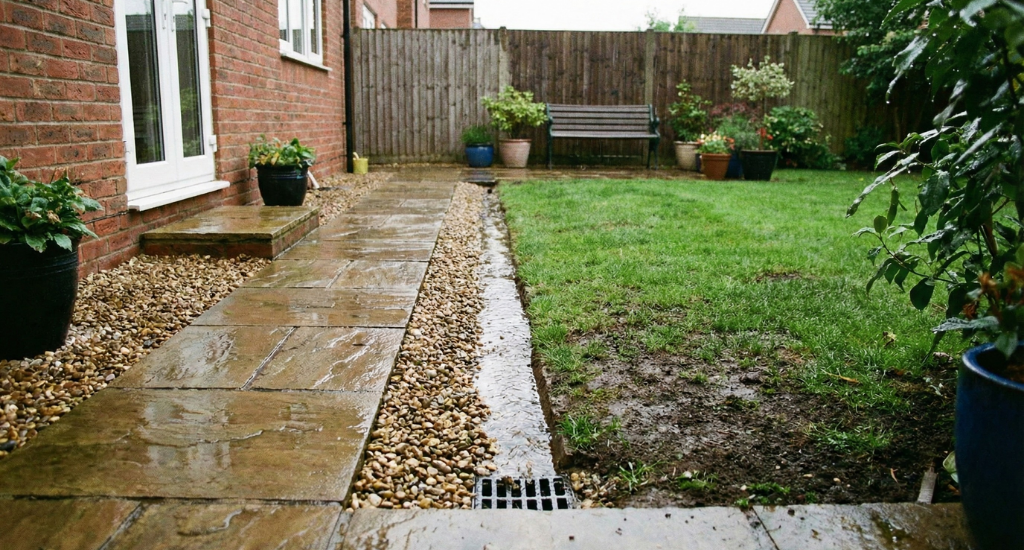
Adding topsoil, digging shallow trenches, or redirecting water with makeshift channels may provide short-term relief, but these measures rarely address the underlying problem. Without proper depth, gradient, and soil preparation, water simply finds another low point.
Effective drainage solutions consider the whole garden, including soil type, existing levels, and how water behaves during prolonged rainfall.
Improving Drainage Starts Below the Surface
Long-term drainage improvements often involve aerating compacted soil, introducing permeable layers, or installing discreet drainage systems that manage water below ground.
These solutions allow water to move away steadily rather than collecting at the surface. When combined with correct levels and thoughtful landscaping, gardens become more resilient to heavy rain.
Why Early Action Protects the Whole Garden
Drainage issues affect more than just lawns. Prolonged saturation damages planting, weakens patio foundations, and creates maintenance headaches throughout the year.
Addressing drainage early prevents knock-on effects and helps preserve the overall structure and appearance of the garden.
Understand the Signals Before Damage Sets In
Heavy rain is not the problem; it is the test. When a garden floods, stays soggy, or erodes, it is communicating that water management needs improvement.
Recognising these signs allows homeowners to take action before the damage spreads.
Solve Drainage Problems with Ominiworks
Gardens are designed to absorb and manage water, but only when drainage is planned correctly. Ignoring the signs after heavy rain often leads to ongoing problems that affect the entire outdoor space.
Ominiworks helps homeowners identify drainage issues and implement practical, long-term solutions that protect gardens, patios, and surrounding areas.
If heavy rain is exposing problems in your garden, contact Ominiworks today to discuss the right approach for lasting drainage improvement.