Porcelain, Sandstone or Resin: Best Patio Finishes for Summer Gardens
Choosing a patio surface is one of those decisions you live with for years, so it pays to get it right before the summer entertaining season. Porcelain, sandstone and resin-bound are three of the most popular finishes in South West gardens, and each behaves differently underfoot, in the sun and after a downpour. This guide compares them on the things that matter in July, to help you pick the best patio finish for summer without regretting it by August.
What Matters Most in a Summer Patio
Before comparing materials, it helps to know what you are judging them on. A patio that works through a British summer has to handle more than sunshine.
Six things make the biggest difference:
- Heat feel: how warm the surface gets underfoot in direct sun.
- Grip: whether it stays safe when a sudden downpour leaves it wet.
- Cleaning: how much scrubbing it needs to look good.
- Garden style: how well it suits your home and planting.
- Family use: how it copes with children, pets and spills.
- Upkeep: how much sealing or attention it wants each year.
Keep these in mind as you weigh the three finishes below.
Porcelain: Cool, Tough and Low-Effort
Porcelain is the modern all-rounder, fired at high temperature into a dense, hard slab. Its standout feature for summer is how little water it takes on. Porcelain absorbs under half a percent of its weight in water, roughly a third of what sandstone soaks up, so a spilled glass of wine or a splash of sun cream beads on the surface rather than sinking in and staining.
That density brings a few summer benefits:
- Heat: porcelain tends to stay cooler underfoot than natural stone, especially in lighter shades.
- Grip: textured porcelain is rated R11 for slip resistance, so it holds firm when a July storm leaves it wet.
- Cleaning: a rinse and an occasional wash is enough, with no sealing ever needed.
The trade-off is a higher price and a more uniform, contemporary look. If you want a crisp, low-effort patio for a modern garden, porcelain is hard to beat. Quality porcelain paving can hold its colour and finish for decades with almost no upkeep.
Sandstone: Natural Character with a Little Upkeep
Indian sandstone is the traditional favourite, a natural stone with a riven surface and colour variation no two slabs share. That character suits cottage gardens and older homes in a way porcelain’s uniformity cannot.
Sandstone earns its keep, but it asks for a little care in return:
- Heat: as a natural stone it holds warmth a touch more than porcelain, though a mid-tone finish rarely gets uncomfortable.
- Grip: the riven texture gives good natural grip, but algae in a damp corner can make it slippery, so it needs regular cleaning.
- Maintenance: sandstone is porous and should be sealed every one to three years to keep out stains and discolouration.
Left unsealed through a wet spell it can blotch, so it is not a fit-and-forget surface. On the plus side it costs less upfront than porcelain, and a well-kept sandstone patio can last decades. It is the choice for anyone who values natural looks over minimal maintenance.
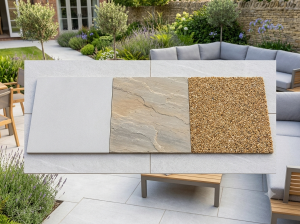
Resin-Bound: Smooth, Seamless and Free-Draining
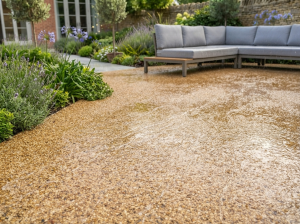
Resin-bound is the newest of the three, made by mixing natural aggregate with a clear resin and trowelling it into a smooth, seamless surface. Its defining quality is drainage: the finish is fully permeable, so rain soaks straight through instead of pooling, which keeps the patio puddle-free after a summer storm.
For summer use it has real strengths:
- Comfort: the surface is smooth and even, pleasant underfoot when you are barefoot or moving chairs around.
- Grip: the textured stone gives reliable slip resistance, wet or dry.
- Maintenance: it resists weeds and moss and needs only an occasional jet wash, with no sealing.
Two things to watch. It must be laid on a solid, well-prepared base by a skilled installer, and the resin should be UV-stable, or strong sun can slowly fade the colour. Get those right and a resin-bound patio gives a clean, modern finish that drains well and lasts twenty years or more.
Matching the Surface to How You Use the Garden
The best finish depends less on fashion than on how your household actually lives outdoors.
- Families with young children: porcelain or resin-bound win on grip and easy cleaning, and both shrug off spills.
- Traditional or period gardens: sandstone’s natural variation is the natural partner for older brick and planting.
- Low-effort gardens: porcelain and resin-bound need the least attention across the year.
- Wet, shaded plots: resin-bound’s drainage and porcelain’s algae resistance both cope better than unsealed stone.
- Tight budgets: sandstone usually costs less to buy, if you are happy to seal it now and then.
There is no single winner. The right surface is the one that matches your garden’s style, your family’s use and the amount of upkeep you are willing to take on.
Cost, Lifespan, and Installation
Price and longevity matter as much as looks, and the three finishes sit at different points.
Sandstone is usually the most affordable to buy, though sealing adds a small ongoing cost. Porcelain sits higher upfront but asks almost nothing of you afterwards. Resin-bound is typically a premium option, reflecting the skilled labour and prepared base it needs.
On lifespan they are closer than the price gap suggests. A cared-for sandstone patio can last decades, porcelain holds its finish for many years with little effort, and a properly installed resin surface comfortably passes twenty years.
Whichever you choose, installation is where the real difference shows. A level, well-drained base and neat edges decide whether a new patio still looks good in ten summers or lifts and cracks in three.
Book a free survey with Ominiworks across the South West and get honest advice on the right finish for your garden.