Driveway Drainage Checks to Make Before Summer Storms
A dry July can make a driveway look faultless. The faults that show up in winter, from puddles to water creeping toward the house, stay hidden while the ground is hard and the sky is clear. Then the first summer storm arrives and shows exactly where the water goes.
Running a few driveway drainage checks now, in the calm before the rain, saves you a soggy surprise later.
Why Dry Weather Hides Drainage Faults
Dry ground is deceptive. When soil bakes for weeks it can turn water-repellent, a bit like a kitchen sponge left to dry out hard: pour water on and it beads and rolls off rather than soaking in.
So the first heavy rain after a dry spell often runs across the surface instead of draining away, pooling in the low spots your driveway has always had.
This is why summer is the ideal time to inspect. You are not battling standing water or mud, and you can see the surface clearly. Faults that a wet week would mask, such as a shallow dip, a blocked channel or a slope pointing the wrong way, are easy to trace on a dry afternoon.
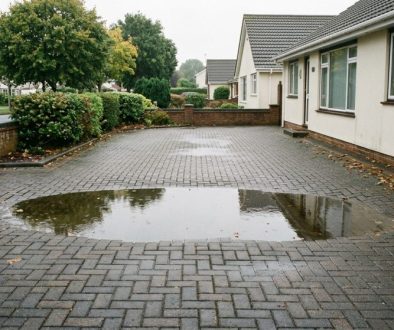
Check For Standing Water and Pooling
You cannot see a puddle on a dry day, so recreate one. Take a bucket or hose, wet different sections of the driveway, then watch where the water settles.
Pay attention to:
- Low spots near the garage or front door, where water tends to gather.
- The join between the driveway and the road or path.
- Any area that stays damp longest after you stop pouring.
Water that lingers for more than a few minutes marks a dip or a drainage fault. Chalk around these spots so you can show an installer exactly where the trouble sits.
If you would rather wait for real weather, step outside during the next downpour and watch the driveway work under proper rain instead. A driveway should shed water within moments of a shower, not hold it like a shallow tray.
Clear Blocked Drainage Channels
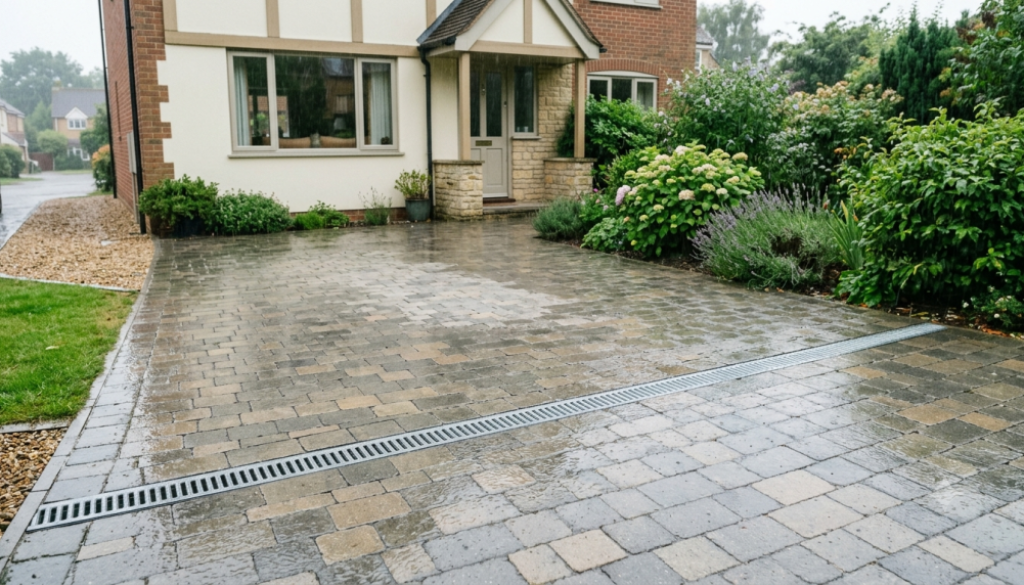
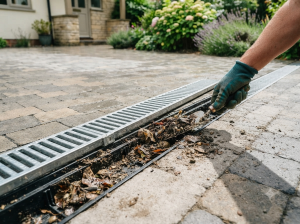
Channel drains and gullies do the heavy lifting on most driveways, and they clog quietly over a dry summer. Leaves, grit, moss and windblown soil build up while there is no rain to flush them through.
Lift the grates and clear out any debris by hand or with a trowel. Flush the channel with a hose and check the water runs freely to the outlet. If it backs up or drains slowly, the blockage may sit deeper in the pipe and need rodding.
A blocked channel is the most common reason a well-built driveway suddenly floods, and it is also the cheapest fault to fix if you catch it early.
Check the Falls and Slopes
‘Falls’ is the trade word for the gentle slope that carries water off a surface. A driveway should always fall away from your house, guiding rain toward the road, a channel or a soakaway.
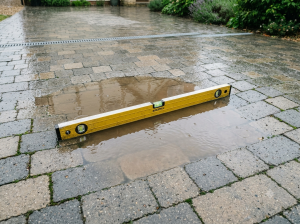
Lay a spirit level or a long straight board across the driveway to check the direction of the slope. Water pointing toward the house is a serious fault, since it sends rain at your walls and thresholds.
Since 2008, any new front driveway over five square metres, roughly the footprint of a single parking space, must either use a permeable surface such as resin-bound paving or drain to a permeable area on your own property rather than onto the pavement. Getting the falls and drainage right the first time keeps you on the correct side of those rules.
Spot Sunken Areas and Cracks
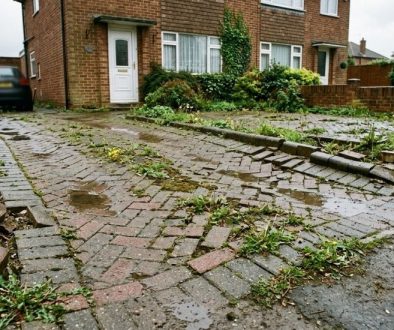
Sunken blocks and cracked surfaces are both a cause and a symptom of drainage trouble. Water collects in a dip, softens the sub-base beneath, and the surface sinks further, which gathers more water still.
Walk the driveway and look for:
- Blocks that sit lower than their neighbours.
- Cracks in tarmac or concrete that let water down to the base.
- Edges that have dropped or crumbled.
Small dips in block paving can be relaid, but a spreading sunken patch usually means the base below has failed and needs proper attention before the surface goes back down.
Watch the Moss-Prone Corners
Moss is a reliable clue. It thrives where a surface stays damp, so a green patch marks a spot that never fully dries, which almost always points to poor drainage or a shaded low area.
Scrub or treat the moss so the surface is safe underfoot, then read the green patch as a signal rather than just a stain. If the same corner keeps greening up year after year, the fix is drainage, not another round of cleaning.
When to Call a Professional
Some jobs suit a Saturday afternoon, others do not. Clearing a channel or scrubbing moss is straightforward. A driveway that floods across a wide area, slopes toward the house, or has a spreading sunken patch needs a proper survey.
A professional can trace where the water actually goes, test how well your ground soaks it away, and advise whether a new channel, a soakaway, a resurface or a permeable driveway is the right answer.
There is even a simple field test they use: dig a small pit, fill it with water and time how long it takes to empty, which shows whether the soil can cope on its own or needs a pipe to carry the overflow.
Booking a check in summer means any work happens in dry, settled conditions rather than in the middle of an autumn downpour, and a dry base is far easier to lay a lasting surface on.
Not sure whether your driveway is ready for the next storm? Ominiworks offers free surveys and quotes across the South West, so you can sort any driveway drainage or resurfacing problems before the wet weather returns.