Is Pressure Washing Damaging Your Patio and Block Paving?
The patio looked transformed for about a fortnight. Then the green started creeping back along the shaded edge, a few blocks began to feel loose underfoot, and the joints that were packed tight in August now sit noticeably lower than the paving either side.
Pressure washing did not cause the growth to return. That was always going to happen. What it may have done is remove something the surface needed, and the timing matters, because a patio heading into a South West winter with open joints is a patio taking on water it has no use for.
This is not an argument against cleaning paving. It is an argument for cleaning it in a way that leaves the structure intact.
What the Jet Is Actually Removing
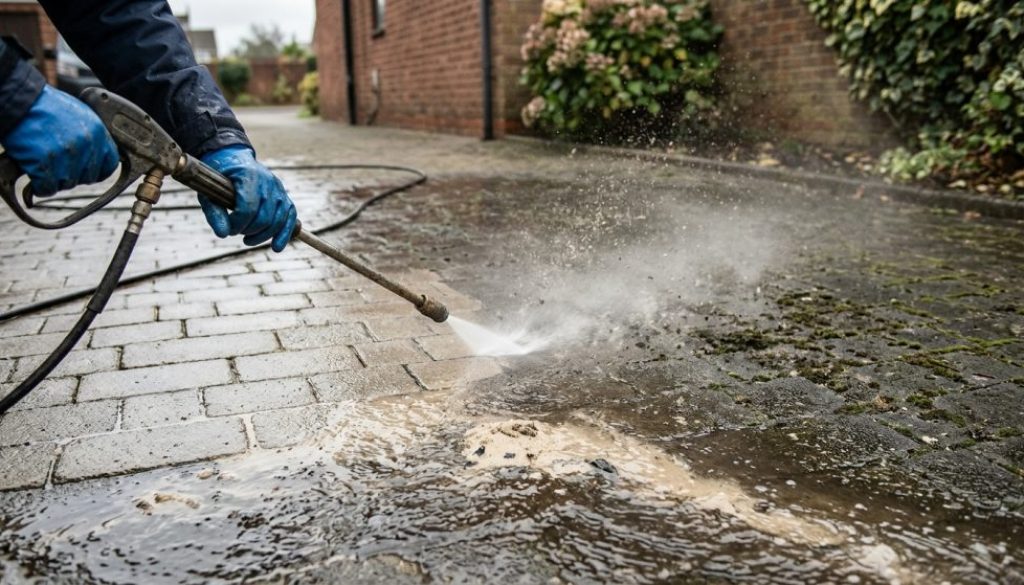
Two things come off a paved surface under pressure. The dirt, moss and algae you wanted gone, and the jointing material you did not think about.
On block paving, the joints are filled with kiln dried sand. That sand is not decoration. Interlock is what makes block paving work: each block transfers load sideways into its neighbours through the sand in the joints, and the surface behaves as one thing rather than several hundred separate units. Take the sand out and every block is on its own.
On slabs, the joints are mortar or a proprietary jointing compound. Damage there is easier to see and easier to fix, but the same principle applies. The joint is holding the surface together and keeping water out of the bedding layer below.
Manufacturer technical guidance is direct about this. Marshalls advises that high-pressure washing is not normally required at all, and that where it is used, no more than medium pressure should be applied. If sand is washed out of the joints during cleaning, it needs replacing with similar material afterwards, and damaged mortar joints need re-pointing to keep the paving sound.
Why Putting the Sand Back Is Not the Same
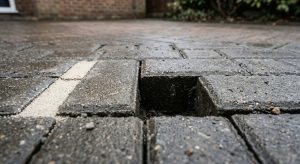
This is the part that surprises people, and it is the reason the loose feeling underfoot never quite goes away.
When your block paving was installed, the kiln dried sand was not simply brushed in. It was worked into the joints with a plate compactor vibrating across the surface, which drives the sand down hard and locks the blocks together. That vibration is what produces the tight, solid feel of new block paving.
Sand brushed in by hand after a wash cannot reach the same density. It sits looser, it settles further with the first heavy rain, and it washes out more readily next time. Repeat the cycle each summer and the joints get progressively weaker, water finds its way into the bedding layer more easily, and the surface starts to move.
Brushing sand back in is still worth doing, and doing it at 45 degrees to the blocks helps it drop into the joint rather than being dragged out again. Just recognise it as maintenance of a slowly declining system rather than a reset.
The Grit You Skipped Sweeping Is Also Doing Damage
One detail from the technical guidance rarely makes it into homeowner advice, and it explains a lot of unexplained surface marking.
Paving should be swept thoroughly before washing, because loose grit and debris left on the surface become abrasive when the water jet picks them up and fires them across the paving. The scouring that follows is not caused by the water. It is caused by the material you left lying on the slab.
The same guidance suggests testing a small area first, holding the lance at an oblique angle rather than pointing it straight down into a joint, and keeping it at least 200mm from the surface. Marshalls’ block paving advice puts that angle at around 30 degrees, worked diagonally across the blocks.
Different Surfaces, Different Risks
|
Surface |
Main risk under pressure |
Sensible approach |
|
Block paving |
Kiln dried sand blown out of joints, blocks losing interlock |
Medium pressure, oblique angle, re-sand once fully dry |
|
Sandstone |
Surface grain eroded, finish dulled |
Low pressure, sweep first, avoid holding the lance in one spot |
|
Limestone |
Etching from acidic cleaners as well as surface erosion |
Low pressure and pH neutral products only |
|
Porcelain |
Less porous, but jointing compound still vulnerable |
Focus on dirt, keep the jet off the joints |
|
Concrete slabs |
Striping where the lance is moved unevenly |
Consistent sweeping motion, or a rotary patio attachment |
|
Resin bound |
Surface damage at high pressure |
Low pressure and the installer’s own guidance |
Sandstone and limestone are porous, which is why they hold dirt and why aggressive cleaning shortens their life. If you are weighing up a replacement rather than another season of cleaning, the differences between porcelain, sandstone and resin as patio finishes are worth understanding before choosing.
Why the Green Returns So Quickly Here
Moss, algae and lichen colonise damp, shaded surfaces. Pressure washing removes what has grown. It does nothing about the conditions that let it grow, and it leaves a slightly roughened, freshly opened surface for the next generation of spores.
The South West gives that next generation an unusually good run. The regional climate is oceanic, with rain falling throughout the year and around 1,000mm annually across much of the area, rising to 2,000mm on higher ground. Winters are mild, with the maritime influence keeping temperatures up and prolonged hard frost rare. Colder regions get a seasonal check on growth that a Somerset or Devon garden simply does not.
So the honest answer is that green growth is a recurring condition here rather than a problem you solve once. What you can change is how fast it comes back:
- Cut back overhanging branches and shrubs to let light and air reach the surface
- Clear leaf litter through autumn rather than leaving it to sit and hold moisture
- Deal with the wet patch that never dries, which is usually a falls or drainage issue rather than a cleaning one
- Use a proprietary treatment on the growth rather than relying on pressure alone, following the product instructions
Cleaning Without Wrecking the Surface
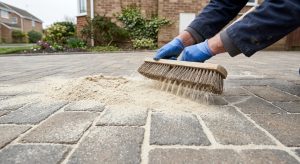
A workable sequence for a domestic patio or driveway:
- Sweep thoroughly and remove all loose grit and debris
- Treat green growth with an appropriate product and give it time to work
- Test a small, unobtrusive area before committing to the whole surface
- Use medium pressure at most, lance held at an oblique angle and well clear of the surface
- Work from the highest point towards the drainage point so you are not washing dirt back over clean paving
- Let everything dry fully, then brush kiln dried sand into block paving joints, building up to the lower part of the chamfer
- Re-point any mortar joints that have broken up
Step six needs genuinely dry conditions. Damp sand clumps on the surface instead of dropping into the joint, which is how people end up thinking they have re-sanded when they have not.
When Cleaning Is Not the Answer
Some symptoms are not dirt, and washing them makes the underlying problem worse by opening the joints further before winter.
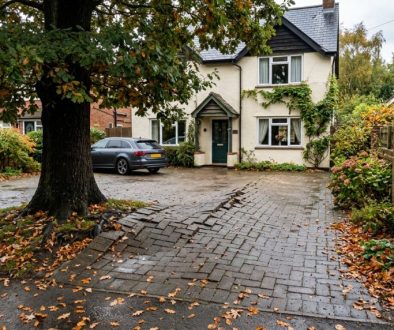
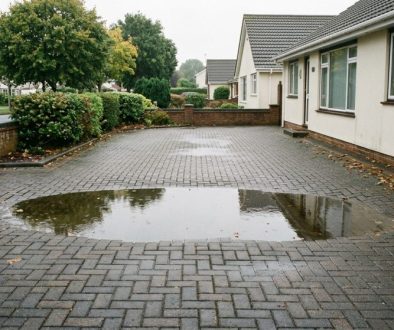
Blocks that rock, a surface that dips where water stands, joints that empty again within weeks of being filled, or paving that has visibly moved since the rain returned are all pointing at the layers underneath rather than the layer on top. That is a different conversation, and it starts with what happens to paving when autumn rain returns after a dry summer rather than with a cleaner.
Ominiworks repairs and relays patios and paving across Somerset and Devon, and we will tell you honestly when a surface needs cleaning and when it needs work.
If your paving has come out of this summer looking worse than it went in, call 0800 999 1367 or book a free survey and we will look at the joints, the falls and the base together.