How to Make Your Patio More Comfortable for July Heat
A patio should be the easiest place to relax in July, yet a poorly planned one turns into a suntrap you avoid by midday.
A few practical changes decide whether you use the space every day or only glance at it through the window. Most of them cost far less than a full rebuild, and several can be added to a patio you already own.
This guide covers how to keep your patio cool in summer, from shade and paving choices to airflow and safe, low-care finishes.
Start With Shade
Shade is the fastest way to make a patio usable in strong sun. Without it, even a beautiful surface bakes and quietly pushes you back indoors.
Your main options depend on budget and garden size:
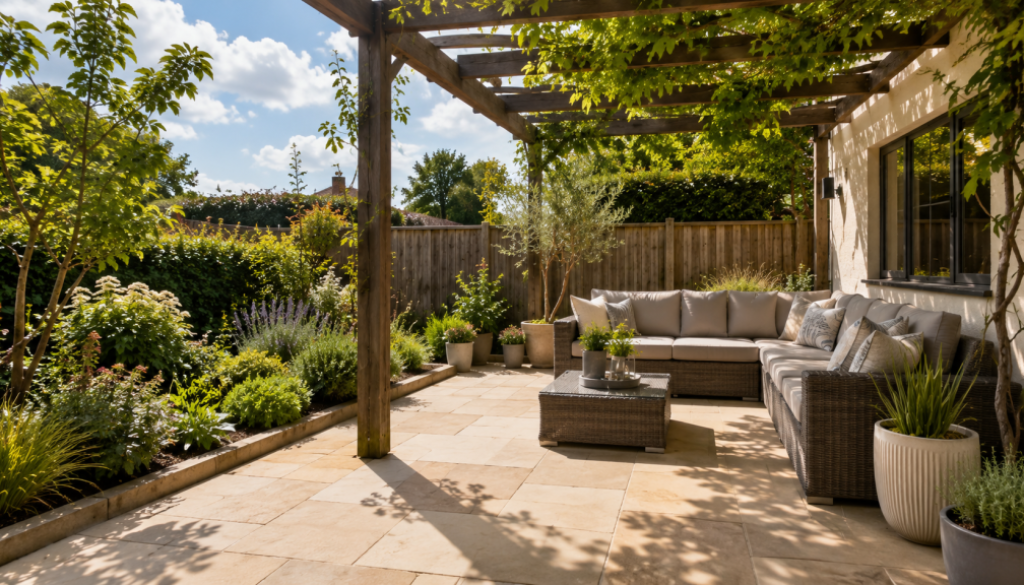
- Pergolas: Fixed structures that give lasting cover and can carry climbing plants for a little extra cooling.
- Retractable awnings: Useful when you want morning sun and afternoon shade from the same spot.
- Parasols and sail shades: Cheaper and easy to move as the sun tracks across the garden.
Position matters as much as the structure. Follow where the sun sits between noon and early evening, since that is when most people want to be outside.
Aim shade at your main seating area rather than the whole patio, and you gain comfort without dimming the light reaching your house.
Timber pergolas also stay cooler to the touch than metal frames, which is worth remembering if children run about barefoot.
Choose a Cooler Paving Colour
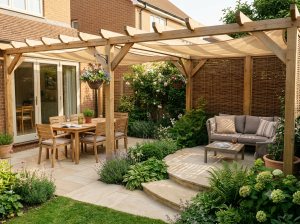
Paving colour changes how hot a surface feels underfoot, and the gap is wider than most people expect. Light stone can sit around 10 degrees Celsius cooler than dark paving under the same sun, which is the difference between bare feet feeling fine and feeling unbearable by early afternoon.
Pale sandstone, buff porcelain and light grey slabs reflect more heat and stay kinder to the feet, and a good paving contractor can match the finish to how you actually use the space.
Dark charcoal and black finishes look sharp, but they soak up warmth like a car bonnet left in an open car park and hold it well into the evening.
If you love a darker look, keep it to borders or a single feature strip, then use lighter slabs across the areas where people walk barefoot or where children play.
Break the Space into Seating Zones
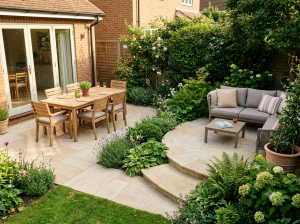
One large open slab of paving rarely gets used well. Splitting a patio into zones gives each part a job and makes the whole space feel calmer.
Think about how you actually spend summer evenings:
- A dining zone near the kitchen door for easy serving.
- A quieter lounge corner with softer seating, tucked into the shade.
- A small sunny spot for anyone who wants the last of the light.
Level changes, planting borders and a shift in paving pattern can mark these areas without a single wall.
Zoning also spreads foot traffic, so no one patch wears out first, and it keeps the patio feeling relaxed rather than crowded when guests arrive.
Keep the Air Moving
Airflow is the quiet factor most patio plans miss. A sheltered corner feels lovely on a mild day and stifling in a July heatwave.
Solid boundaries on every side trap warm air and stop any breeze reaching you. Where you need privacy, slatted screens or hit-and-miss fencing let air pass through while still blocking the view.
Taller borders and climbing plants cool the air around them slightly as they release moisture during the day.
It also helps to point your main seating so it faces the way the breeze usually comes from, which in much of the South West is off the south-west. If your patio still sits in a real suntrap, a simple standing fan or a short misting line under a pergola can shift stale heat on the stillest evenings.
Soften the Space with Planting
Hard surfaces on their own feel harsh in high summer. Greenery brings the temperature down a touch and makes the whole area more inviting.
Grouped pots, raised beds and a planted border around the edge break up the heat and add shade at ground level. Leafy plants near seating give the feeling of a cooler spot even before the sun drops.
Choose varieties that cope with strong South West light so they still look good through a dry July rather than wilting by the second week.
Pick Surfaces That Stay Safe Underfoot
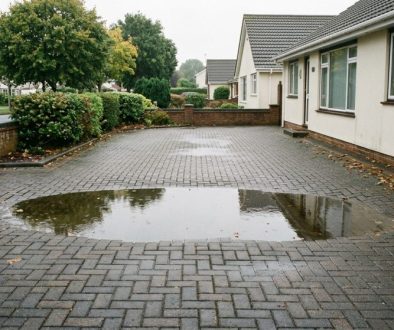
Comfort counts for little if the surface turns risky. Summer brings its own hazards, from glare to slippery patches after a sudden downpour.
Look for paving with a textured or riven finish, or porcelain rated for good slip resistance. These grip well when wet, which matters when July storms follow a dry spell and leave slabs greasy with settled dust.
Avoid highly polished surfaces in bright sun, since they throw off harsh glare.
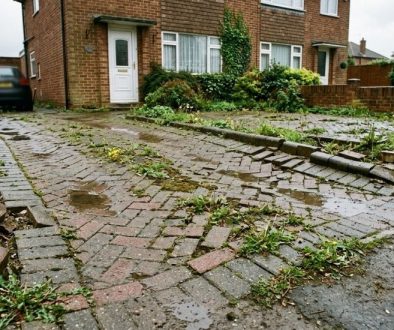
Keep joints filled and level as well. A raised edge you step over easily in spring becomes a simple trip point once the garden is busy with family and visitors.
Choose Low-Maintenance Finishes
Summer is for using the garden, not scrubbing it. The right finish keeps upkeep low so weekends stay free.
Porcelain wipes clean and shrugs off stains from spilled drinks and sun cream. Resin-bound surfaces shed water and rarely grow moss. Sealed sandstone asks for a little more attention, though a yearly clean keeps it looking fresh.
A good joint compound between slabs blocks weeds before they start, which saves the fiddly job of pulling them out by hand each week.
Whatever you pick, a quick sweep and an occasional rinse usually covers summer. Steer clear of finishes that need constant weeding between joints, or you will spend July on your knees instead of in a deckchair.
Planning a patio installation or upgrade this summer? Ominiworks offers free surveys and quotes across the South West, so you get honest advice before the next warm spell arrives.