Garden Decking in Yeovil: Wood vs Composite Guide 2026
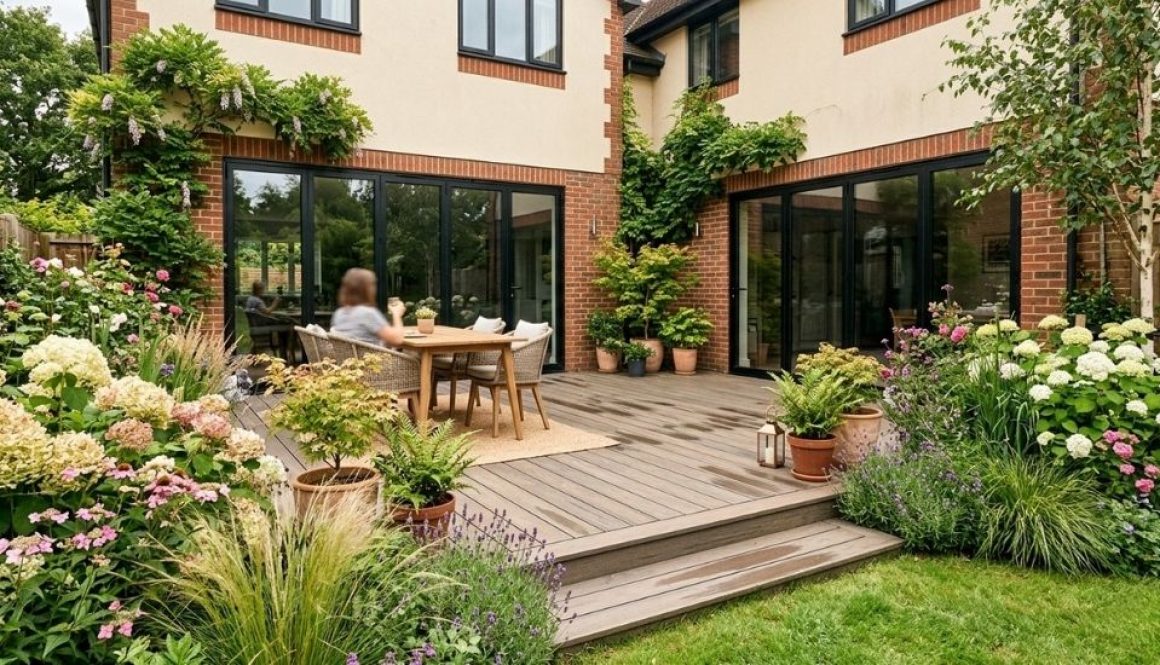
Yeovil gardens have a habit of sloping. Plots that run down towards the Yeo valley, older terraces with stepped rear plots, newer estates built on made-up ground: none of them give you a flat, usable surface without some help. Decking solves that problem faster and more cheaply than digging out and levelling for a patio, and it gives you a proper outdoor room rather than a strip of tired lawn.
The decision most homeowners get stuck on is the material. Softwood, hardwood or composite all behave differently once a Somerset winter gets to work on them. Here is how they compare, what you should expect to pay, and what to do in August to get a deck ready for the wetter months.
Why Decking Works Well on Yeovil Plots
A deck sits on a frame supported by posts or pads, so it can bridge a slope instead of fighting it. That changes the sums on a difficult garden.
- Uneven ground stops being a problem. A frame can be packed and levelled where a patio would need excavation, retaining walls and hardcore.
- It goes over what is already there. Sound concrete, an old paved area or a failed patio can often be built over rather than dug up and skipped.
- Drainage is simpler. Water passes between the boards rather than needing falls, channels and soakaways designed in from the start.
- Installation is quicker. Most domestic decks are finished in two to four days once groundworks are done, so the garden is out of action for less time.
Where a deck is less suitable is a very wet, shaded corner with no air movement underneath. Ventilation below the frame matters more than almost anything else, which is worth raising with your installer at survey stage.
Wood or Composite: An Honest Comparison
There is no single right answer here. The best choice depends on how much upkeep you are willing to do and how long you plan to stay in the house.
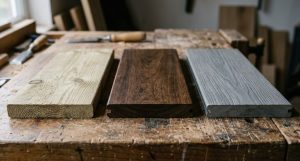
Pressure-treated softwood is the entry point. It costs the least, it takes stain or oil well, and boards can be sanded and refinished if they weather badly. In return it wants attention every year, and untreated cut ends are where rot usually starts.
Hardwood such as balau or ipe is dense, heavy and long-lived. Left alone it silvers to a soft grey; oiled, it keeps a rich brown. Expect a higher bill and a longer install, since these boards need pre-drilling.
Composite boards mix wood fibre with recycled polymer, usually with a protective cap on the outer surface. They do not need staining, they resist splinters, and warranties of 20 to 25 years are common. The trade-offs are a higher upfront cost, a surface that gets warm in direct sun, and no option to sand out a deep scratch.
There is a useful local parallel here. Yeovil built its name on gloves, and by the 1950s the town was producing around half of all the leather gloves made in England. A well-made glove has to stretch and flex with the hand thousands of times without splitting a seam. Decking boards face the same demand on a slower cycle, swelling in damp weather and shrinking in dry heat. That is why expansion gaps and correct fixing centres matter so much on composite, and why softwood should be allowed to acclimatise on site before it is screwed down. Boards that cannot move end up cupping, lifting or splitting at the fixings.
What Garden Decking Costs in Yeovil
Prices move with board choice, access and how much groundwork the site needs. As a guide for supply and installation:
- Softwood decking: roughly £70 to £120 per square metre
- Composite decking: roughly £120 to £200 per square metre
- Hardwood decking: roughly £150 to £250 per square metre
Several things sit outside those figures and are worth budgeting for separately:
- Balustrades, handrails and steps
- Clearing and levelling before the frame goes in
- An aluminium sub-frame instead of treated timber, which adds cost but outlasts the boards
- Recessed lighting, skirting boards and trims
- Removal and disposal of an old deck
A site survey is the only way to get a figure you can rely on, since access and ground conditions often make more difference than the boards themselves.
Planning Rules and Safety Points
Most garden decking falls under permitted development in England, so no application is needed, provided a few conditions are met. Decking is permitted development where the platform sits no more than 30cm above the ground, where it and any other extensions or outbuildings cover no more than half the garden area, and where none of it sits forward of the wall forming the principal elevation of the house.
Two things catch Yeovil homeowners out:
- Sloping gardens. A deck level with your patio doors at the house end can easily exceed 300mm at the far end, which puts it outside permitted development.
- Conservation areas and listed buildings. Extra restrictions apply, and it is worth a call to Somerset Council before anything is ordered.
Separately, Building Regulations require a barrier where there is a drop of 600mm or more, regardless of whether planning permission was needed. Any raised deck should also be checked for structural adequacy rather than assumed safe because it feels solid on the day it is built.
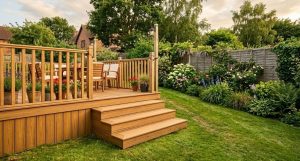
August Maintenance That Pays Off by November
Late summer is the right window for deck care. Boards are dry, treatments cure properly, and anything you fix now will not be sitting under standing water in January.
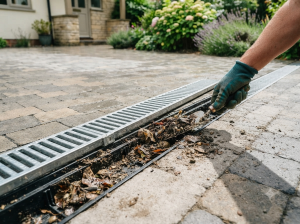
- Clear the gaps. Leaf litter and moss trapped between boards hold moisture against the timber and block the drainage the deck relies on.
- Wash gently. A stiff brush and a proper deck cleaner beat a pressure washer on full power, which can fur up softwood and force water into the frame.
- Check every fixing. Lifted screws, rusted heads and loose joist hangers are cheap to sort now and expensive to ignore.
- Re-oil timber while it is dry. Oil applied to damp boards traps moisture underneath and lifts within a season.
- Look underneath. Airflow beneath the frame is what keeps the joists sound, so clear anything blocking the void.
- Treat algae early. Green film is the main slip risk on any deck, timber or composite, and it spreads fast once the weather turns.
When Repair Stops Being Worth It
Some decks are worth saving and some are not. Replace individual boards where the frame is sound. Start again where the frame is not.
Signs the structure has gone rather than the surface:
- Noticeable bounce or movement when you walk across it
- A screwdriver pushing easily into a joist
- Boards cupping across their width in several places
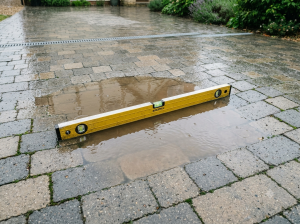
- Water pooling and staying put after rain
- Posts moving at ground level
We handle both repairs and full replacements, along with patio installation and paving where a deck is not the right answer for the space.
Book a Free Decking Survey in Yeovil
Ominiworks installs and repairs garden decking across Yeovil, Sherborne, Martock, Ilchester and the surrounding villages, alongside our work in Taunton and the wider South West. Every job starts with a free site visit, a written quotation and a clear timescale, with no pressure to commit.
Call 0800 999 1367 to arrange your survey, or send us your plans through the contact page. You can see finished projects in our gallery.