What a Proper Driveway Installation Actually Looks Like (Step-by-Step)
A driveway does not fail because of what you see. It fails because of what you don’t. Many installations look clean on the surface but are built on weak foundations. That is why some driveways start shifting within months, while others hold firm for years.
A proper installation follows a structured process. Skip one step, and the whole system weakens.
At Ominiworks, every project follows a method that focuses on long-term performance, not just appearance.
Step 1: Site Inspection and Planning
Before any digging starts, the site needs to be assessed properly.
This includes:
- Measuring the area accurately
- Checking ground conditions
- Identifying drainage requirements
- Understanding how the space will be used
A driveway for occasional parking is different from one handling daily vehicle traffic. Planning reflects that difference.
Without this step, the installation becomes guesswork.
Step 2: Excavation to the Correct Depth
Excavation is where many cheap jobs cut corners.
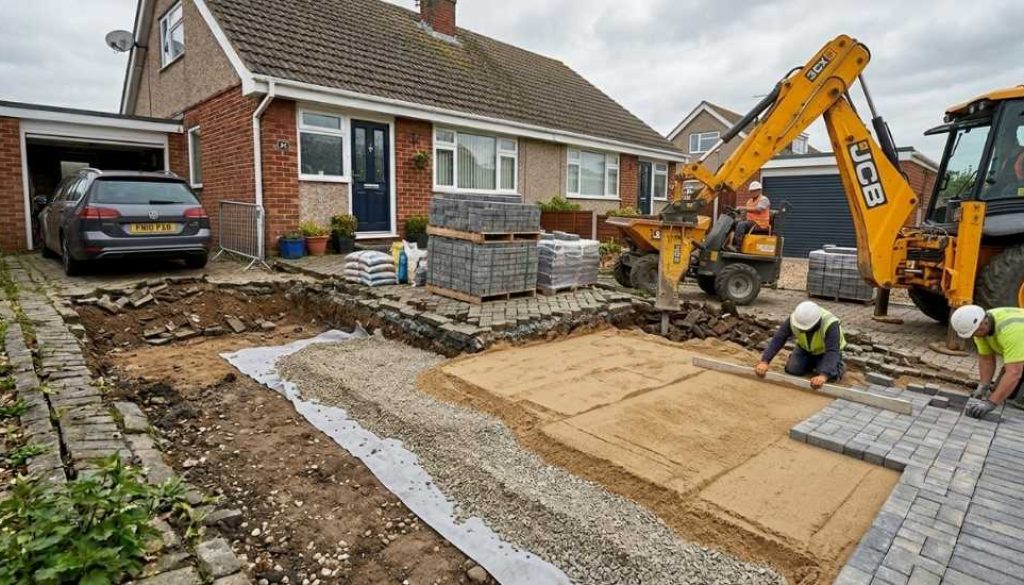
A proper driveway installation requires removing enough material to create space for a stable base. This is not just scraping the surface.
Typical excavation includes:
- Removing existing materials
- Digging to the required depth
- Clearing soft or unstable ground
If this step is rushed, everything built on top becomes vulnerable.
Step 3: Installing the Sub-Base
The sub-base is the backbone of the driveway. It distributes weight and prevents movement.
This layer is usually made from compacted aggregate and installed in stages.
Key points:
- Laid in layers, not all at once
- Each layer compacted thoroughly
- Built to the correct thickness
Think of it like the foundation of a house. You never see it, but it determines everything above it.
Step 4: Drainage Setup
Water is the most common cause of driveway failure.
A proper installation ensures water flows away from the surface instead of sitting on it.
This can include:
- Adjusting levels for natural runoff
- Installing drainage channels
- Using permeable materials where suitable
Ignoring drainage is like building a roof without gutters. The damage builds slowly, then shows all at once.
Step 5: Edge Restraints and Structure
Edges are what keep the driveway in place.
Without proper restraints:
- Blocks can spread
- Surfaces lose shape
- Movement increases over time
Strong edging locks the entire structure together.
Step 6: Laying the Surface Material
Only after the groundwork is complete does the visible surface go in.
Whether it is block paving, resin, or stone, the material is laid with precision.
This stage focuses on:
- Accurate alignment
- Consistent spacing
- Clean, level finish
This is the part most homeowners notice, but it only works because of everything underneath.
Step 7: Finishing and Compacting
The final stage secures the installation.
For block paving, this includes:
- Brushing in jointing sand
- Compacting the surface
For resin:
- Ensuring an even, smooth finish
This step locks everything together and completes the structure.
What Happens When Steps Are Skipped
When installers rush or cut costs, these steps are reduced or ignored.
The result:
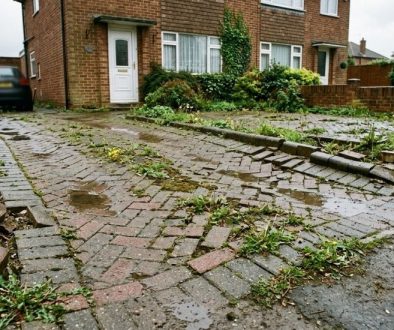
- Uneven surfaces
- Early cracking
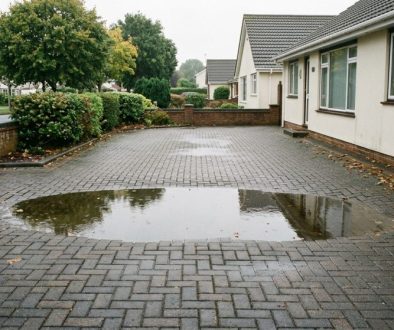
- Water pooling
- Structural failure
The driveway may look fine initially, but the problems are already built in.
Why Process Matters More Than Materials
Many homeowners focus on choosing between materials. While that matters, the process matters more.
Even premium materials fail if installed poorly.
A well-built base with standard materials will outperform a poorly built base with expensive finishes.
Built From the Ground Up
A proper driveway is not just laid. It is built. Each step supports the next, creating a structure that lasts.
At Ominiworks, every installation follows this process to ensure the result is more than just a good-looking surface. Book a free site visit from us today.