Patio Foundations: Why the Base Matters Most
A beautiful patio starts long before the first paving slab is laid. Beneath every smooth, level surface lies the true hero of durability—the foundation. The quality of a patio’s base determines whether it will remain even, stable, and crack-free for years to come. Without proper preparation, the best materials can still shift, sink, or deteriorate under pressure.
If you’re looking at a patio installation in Bridgwater, our local team at Ominiworks ensure the groundwork is suited to the Somerset soil and weather—visit our Patio Installation in Bridgwater page for more about our local service.
For homeowners planning a patio upgrade, understanding what makes a solid foundation is crucial. From sub-base selection to drainage and compaction, each step affects the patio’s lifespan and overall performance.
Understanding the Importance of the Base
Patio foundations serve as the load-bearing structure that supports the entire surface. They distribute weight evenly, prevent movement, and allow water to drain correctly. When corners or slabs start to wobble, the issue almost always traces back to the base layer rather than the visible paving.
A properly built base ensures:
- Long-term stability with minimal movement
- Protection against frost heave and subsidence
- Improved drainage and reduced puddling
- Even weight distribution to prevent cracking
In short, a good foundation transforms a patio from a temporary surface into a lasting outdoor feature.
Excavation: Setting the Right Depth
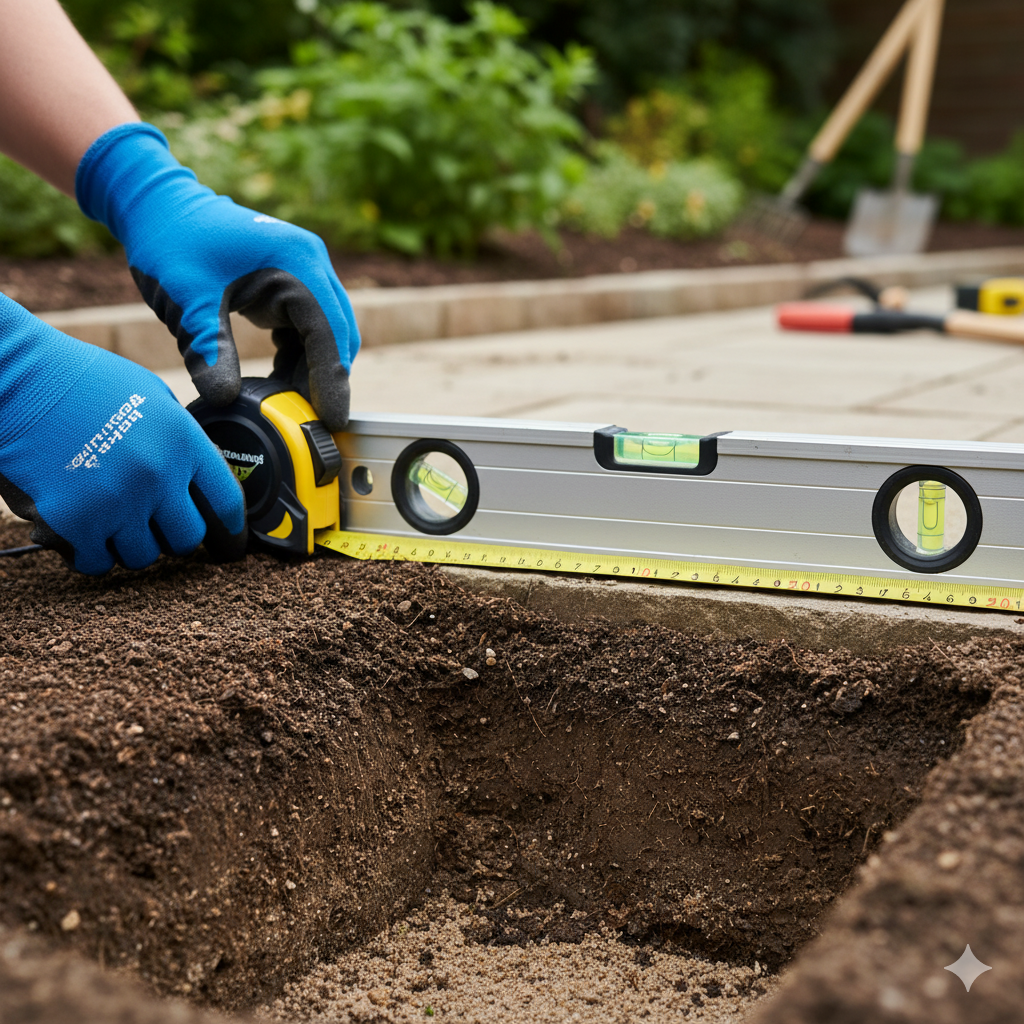
The first step in building a reliable foundation is correct excavation. This stage determines how well the patio will sit within its surroundings and how effectively it handles load and water flow.
Typically, contractors remove around 150–200 mm of soil, depending on the type of paving and ground conditions. The goal is to reach firm, undisturbed ground before layering new materials. A deeper excavation may be required on softer soil or areas with poor drainage. The finished patio should sit slightly below the house’s damp-proof course to avoid water splashing against exterior walls.
Neglecting excavation depth is one of the most common causes of patio failure. Shallow bases tend to shift or sink as the ground settles, especially after heavy rainfall or frost.
Sub-Base Materials: Strength Beneath the Surface
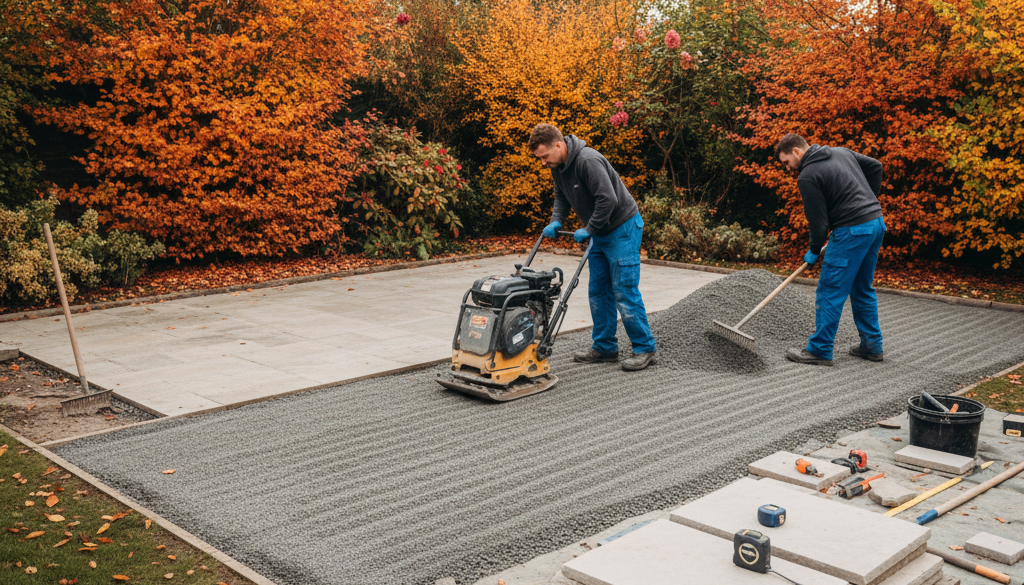
The sub-base is the most important layer of a patio foundation. It’s typically built from MOT Type 1 crushed stone, compacted in several layers to create a dense, stable platform. The interlocking particles provide load-bearing strength and prevent the surface from moving under weight.
For areas requiring enhanced permeability, Type 3 aggregate or other open-graded materials can be used to allow rainwater to filter through. The key is to choose a material that balances stability with drainage capacity.
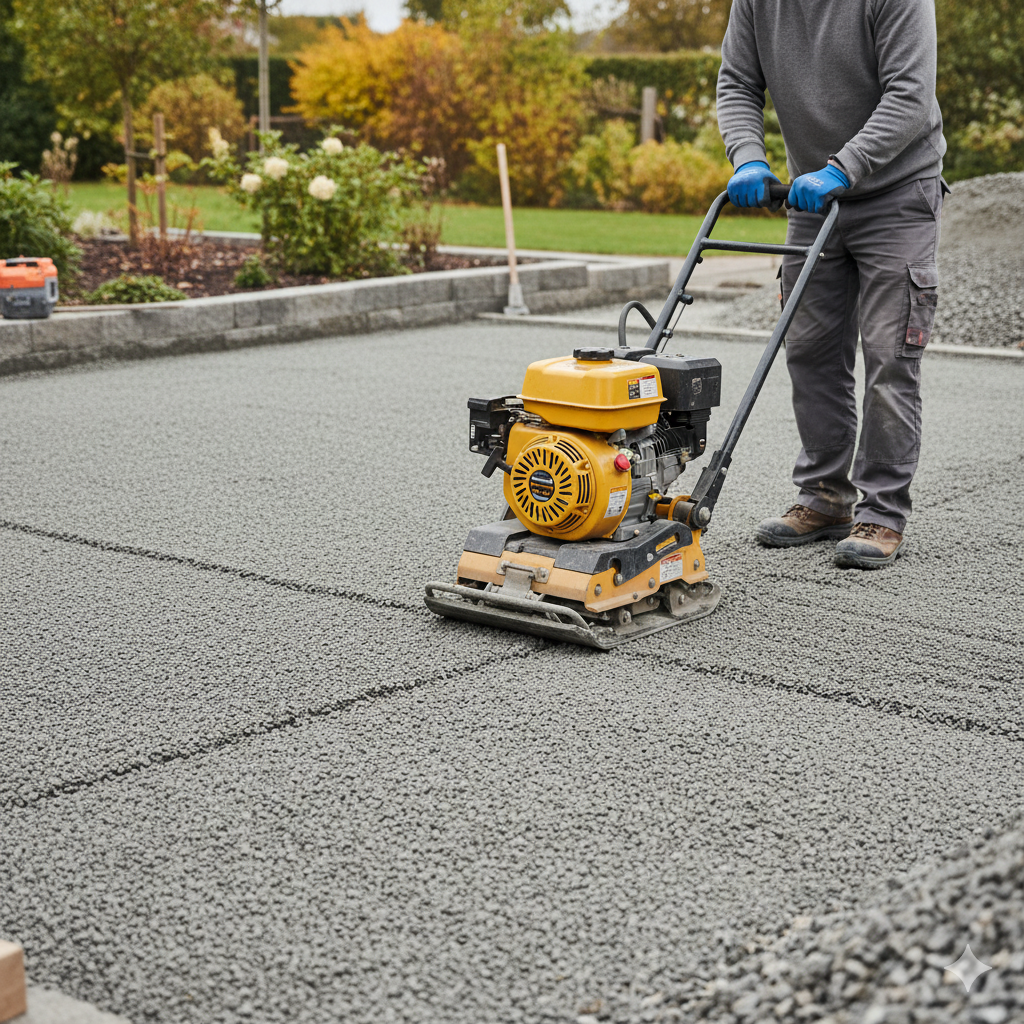
Each layer of sub-base should be compacted with a vibrating plate or roller in 75 mm increments. Skipping this step creates air gaps that later lead to sinking slabs or uneven settlement.
Levelling and Compaction
Once the sub-base is in place, levelling ensures an even surface across the patio area. The base must include a slight fall—usually 1:60 gradient—to direct water away from the property.
Compaction is equally critical. Every layer, from the hardcore to the bedding sand, needs to be tightly packed. Loose materials trap water and shift under pressure. Professional installers use plate compactors to remove air pockets and achieve uniform density. This attention to detail helps prevent the common issues of dipping corners or rocking slabs.
Precision at this stage creates a smooth, level finish that simplifies the paving process and enhances overall durability.
Drainage: Keeping Water in Check
Even the most robust patio can suffer if water isn’t properly managed. Standing water can cause frost damage, algae growth, and joint erosion. Incorporating effective drainage into the foundation design protects both structure and appearance.
Options include trench drains, gravel soakaways, or permeable bedding layers. In gardens prone to heavy rainfall, combining a slight slope with permeable sub-base materials provides the best results. For patios adjoining driveways, integrated drainage prevents water from flowing toward the house or pooling on connecting paths.
Correct drainage design also contributes to sustainability by reducing runoff and helping groundwater recharge naturally—an increasingly important consideration for UK homeowners.
The Role of Bedding Layers
Above the compacted sub-base lies the bedding layer, which acts as a cushion for the paving slabs. It ensures full contact and even support across each unit. The ideal thickness is usually 30–50 mm of sharp sand or a sand-cement mix, adjusted to suit the chosen material.
Uniformity is key. Too much variation causes lippage—uneven heights between slabs—while too thin a layer leads to cracking. Once the slabs are positioned, gentle tapping and re-checking of levels create a seamless surface. Proper bedding eliminates weak points that could shift or loosen over time.
Choosing the Right Materials for Longevity
Different paving materials have distinct weight, size, and permeability characteristics, which influence foundation design.
- Natural stone slabs require a firm, evenly compacted base with minimal flex.
- Porcelain tiles, being thinner and denser, need perfectly level bedding for full adhesion.
- Concrete pavers can tolerate minor movement but benefit from a stable, well-drained foundation.
The foundation materials must match the demands of the chosen paving. Working with professionals ensures compatibility between the sub-base, bedding, and surface finish, resulting in long-lasting performance and visual consistency.
Borders, Edging, and Support
Borders and edging provide crucial structural support to a patio’s perimeter. Without them, paving slabs can spread outward or shift under pressure.
Concrete haunching, kerb stones, or block edging help lock the paving in place. These features not only reinforce strength but also frame the patio beautifully, defining its shape and transition to garden areas. Using contrasting tones or materials can add a subtle decorative effect whilst protecting the base from erosion caused by rainwater and foot traffic.
Integrating Custom Features for Functionality
Foundations also play a role in supporting additional patio features that enhance comfort and convenience. Integrating these elements during the groundwork stage ensures they are secure and long-lasting.
Examples include:
- Drainage channels neatly set into the base for efficient water flow.
- Recessed lighting fitted flush with the paving for safe evening use.
- Built-in borders or seating areas formed with raised edging blocks.
- Access points or service conduits for future installations such as garden power outlets.
By planning these features early, homeowners can avoid the disruption of retrofitting later on. A solid base not only supports the patio itself but also the lifestyle improvements built upon it.
Sustainable Base Design
Modern patios can combine performance with environmental responsibility. Sustainable drainage solutions (SuDS) are increasingly favoured across the UK, helping manage rainfall naturally.
Using permeable aggregates, rain gardens, or green buffer strips allows water to soak through instead of running off into drains. Recycled sub-base materials also reduce environmental impact without compromising strength. Homeowners who value eco-friendly design can achieve both longevity and sustainability with thoughtful foundation planning.
Professional Standards: Why Expertise Matters
Laying a proper patio foundation requires precision, the right equipment, and experience in assessing site conditions. While small DIY projects can succeed with care, large or uneven areas demand professional attention.
Experts handle tasks like soil testing, gradient calculation, and compaction depth to ensure the base performs under real-world conditions. They also coordinate drainage, lighting conduits, and edge restraints efficiently—saving time and preventing costly mistakes.
A professionally built foundation might not be visible once the patio is complete, but its strength is evident in every step you take across it.
Build from the Ground Up with Ominiworks
A patio’s beauty and longevity depend entirely on the quality of its foundation. Strong groundwork provides the stability, drainage, and alignment that keep your patio flawless year after year. From excavation and compaction to edging and drainage, each detail contributes to a surface that resists movement and withstands the UK’s changing seasons.
Ominiworks delivers expert patio installation backed by skilled groundwork and attention to detail. Whether you’re upgrading an existing surface or designing a new outdoor space, our team ensures every project starts with a foundation built to last.
Create a patio that stays level, durable, and elegant—contact Ominiworks today to schedule your consultation and explore professional paving and foundation services.