The Real Cost of Skipping Groundwork: Lessons From Failed Winter Paving
When paving fails during winter, the surface often gets the blame. Homeowners notice sinking blocks, cracked slabs, or pooling water and assume the materials were poor. In reality, winter damage almost always traces back to what sits underneath. Skipped or rushed groundwork is the leading cause of paving failure, and winter conditions are what expose it.
Cold temperatures, prolonged rainfall, and freeze–thaw cycles put stress on every layer beneath a driveway or patio. If the foundations were not built correctly, problems that were hidden for months can surface quickly and expensively.
Why Groundwork Matters More Than the Surface
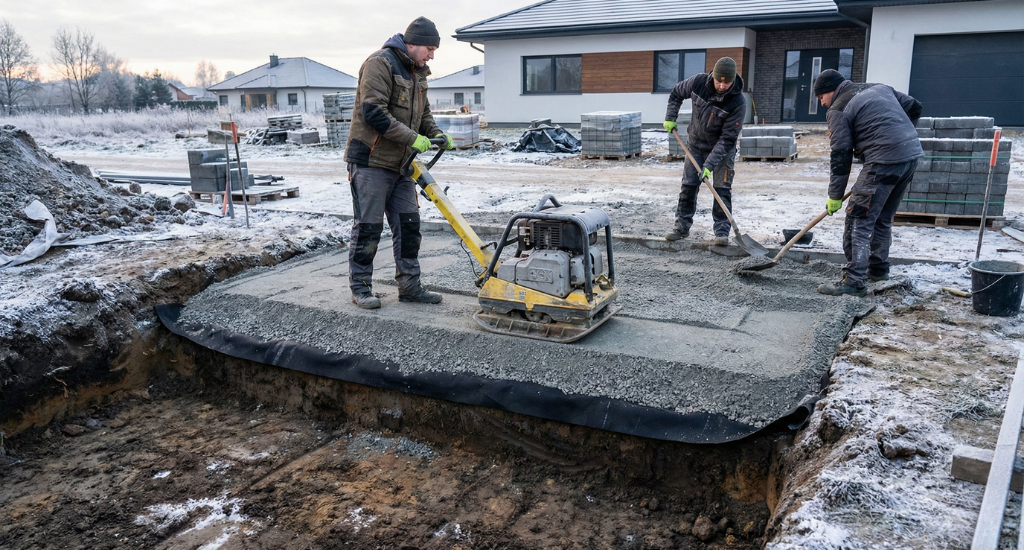
The visible paving is only the final layer of a much deeper system. Below it sits the bedding layer, sub-base, and ground preparation that carry the load and manage moisture. When any of these layers are compromised, the surface above has little chance of surviving winter conditions.
Groundwork failures do not always show immediately. During dry weather, weak foundations can appear stable. Once winter rain saturates the ground and frost causes expansion, those weaknesses become impossible to ignore.
What Happens When Excavation Depth Is Reduced
One of the most common shortcuts is shallow excavation. Proper paving requires sufficient depth to allow for compacted sub-base layers and drainage. When contractors dig less than required, the surface sits too close to unstable ground.
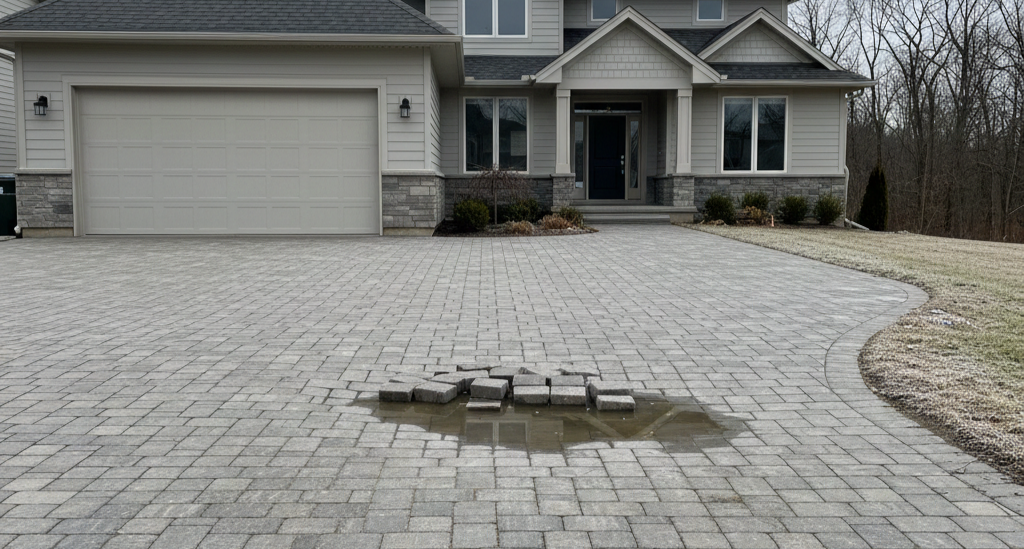
During winter, moisture softens the soil beneath the paving. Without adequate depth and compaction, the surface begins to move under weight. This leads to dips, uneven levels, and long-term structural damage that cannot be fixed with simple surface repairs.
The Hidden Cost of Poor Sub-Base Materials
Even when excavation depth looks correct, the wrong sub-base material can undermine the entire installation. Low-grade aggregates, mixed rubble, or poorly compacted layers fail to support paving under winter stress.
A proper sub-base distributes weight evenly and resists water movement. When inferior materials are used, water collects within the base, freezes, and expands. Over time, this causes movement that no amount of re-levelling or patching can permanently solve.
Why Winter Makes Groundwork Failures Obvious
Winter weather does not create groundwork problems; it reveals them. Prolonged rainfall exposes drainage weaknesses, while frost highlights areas where moisture is trapped beneath the surface.
Driveways and patios that were marginally stable in summer often fail during winter because the ground beneath them is no longer firm. This is why many homeowners only realise there is a deeper issue once cold weather arrives.
Why Repairs Often Fail When the Base Was Never Right
Surface-level repairs can be tempting. Replacing a few blocks or filling visible dips may seem like a quick fix, but these repairs rarely last when the underlying foundation is compromised.
Without addressing the sub-base and drainage, repaired areas are subjected to the same conditions that caused the original failure. In many cases, repeated repairs end up costing more than rebuilding the area properly from the start.
Ground Conditions Make a Difference
Soil type plays a significant role in how paving performs during winter. Clay-heavy ground holds moisture for longer, increasing the risk of movement when temperatures drop. Poor drainage compounds the issue further.
In areas where soil retains water, groundwork must be designed to manage moisture effectively. This includes proper sub-base depth, drainage planning, and correct compaction techniques.
For properties in and around Bath, winter paving failures are often linked to water retention and ground movement. If you’re unsure whether your driveway problems stem from surface wear or deeper foundation issues, our Bath driveway specialists can assess how your existing driveway is performing and advise whether repair work or a full rebuild is the most practical long-term option.
The Long-Term Cost of Skipping Groundwork
Cutting corners on groundwork may reduce initial installation costs, but it significantly increases long-term expenses. Failed paving often requires lifting large sections, removing unsuitable materials, and rebuilding the foundation correctly.
This process is disruptive and costly, especially when carried out during or after winter damage. Investing in proper groundwork from the outset avoids repeated repairs and extends the lifespan of the surface.
Why Professional Groundwork Is Always Worth It
Professional installers follow proven groundwork methods because they understand how surfaces behave over time. Correct excavation, high-quality sub-base materials, proper drainage, and thorough compaction ensure paving remains stable year after year.
Winter conditions quickly separate well-built installations from those that were rushed. Quality groundwork is not visible once paving is complete, but it is the single most important factor in long-term performance.
Prevent Winter Failures with Ominiworks
Failed winter paving almost always points to problems beneath the surface. Skipping or rushing groundwork may save time initially, but it leads to costly repairs when winter conditions expose the weaknesses.
Ominiworks delivers professional driveway and paving installations built on properly prepared foundations. Our approach focuses on correct groundwork, drainage, and long-term durability to ensure your surface performs reliably through winter and beyond.
If your paving has failed after winter, contact Ominiworks today for an expert assessment and honest advice on the best way forward.